Silicon: The Element Not on Fertilizer Lists but Halves Stress
It is one of the greatest ironies of agricultural history that the second most abundant element in the Earth’s crust after oxygen is barely mentioned in the standard fertilization programs of modern agriculture. To ensure sustainability and protect plants against harsh natural conditions in ecological farming, we generally focus on the Nitrogen, Phosphorus, and Potassium (NPK) trio. However, there is a hidden hero working quietly in the background, literally “steeling” the plant’s defense system: Silicon (Si).
Today, we will examine at the cellular level why silicon has been excluded from traditional nutrient lists and how it dramatically reduces diseases, drought, and pest attacks in ecological farming.
1. The “Absolute Necessity” Fallacy: Why Isn’t Silicon in Fertilizer Bags?
The main reason silicon has remained off the agricultural radar is the strict definition of “absolute necessity” in plant physiology.
-
The Arnon and Stout Criterion: According to plant nutrition rules established in the 1930s, for an element to be considered “essential,” the plant must be unable to complete its life cycle (from seed to seed) without it. A plant can grow, flower, and produce seeds without silicon. Therefore, silicon was pushed into the category of “beneficial” rather than “essential” elements.
-
The Difference Between the Lab and the Field: Plants can grow flawlessly without the need for silicon in controlled, stress-free laboratory or greenhouse environments. However, the real world is not like that. In real field conditions full of wind, heavy rain, scorching sun, drought, fungal spores, and insect attacks, silicon is not a luxury; it is insurance for survival and high yield.
-
The Insolubility Problem in Soil: Although 27% of the Earth’s crust consists of silicon, the vast majority of it is in the form of quartz or complex silicate minerals that plants cannot absorb. Plants can only take up silicon in the form of monosilicic acid dissolved in water in the root zone. In other words, just because your soil is full of silicon rocks doesn’t mean your plant can benefit from this element.
2. Mechanical and Physical Armor: What Happens in the Cell Wall?
When the plant absorbs monosilicic acid through its roots and transports it upwards via the xylem, this element accumulates where water evaporates through transpiration (leaf surfaces, cell walls) and transforms into amorphous silica gels called phytoliths (plant stones).
-
Armored Cell Walls: Silicon combines with cellulose and pectin in the plant’s epidermal (outer) cell walls to form a solid double-layered barrier. This literally clothes the plant in physical armor. The leaves of plants fed with silicon are more erect, their stems are thicker, and they are mechanically much more resistant to breaking.
-
A Stone Wall Against Fungal Invasions: When spores of pathogenic fungi like powdery mildew or downy mildew land on the leaf surface, they extend thin hyphae to pierce the cell membrane. A leaf surface armored with silicon is much harder than the fungal hypha can penetrate. Physical penetration fails, and the disease is stopped before it even begins.
-
Damage to Insects’ Jaw Structures: When sucking and chewing insects (aphids, caterpillars) try to eat leaves hardened with silicon, their mouth and jaw parts (mandibles) literally wear out and get damaged. Insects stop feeding as the plant becomes a difficult-to-digest and physically damaging target for them.
3. The Invisible Shield: Silicon Against Abiotic Stress
The effect of silicon is not limited to physical barriers; it also regulates the internal physiology of the plant, massively reducing abiotic (environmental) stresses such as drought, extreme heat, and toxicity.
-
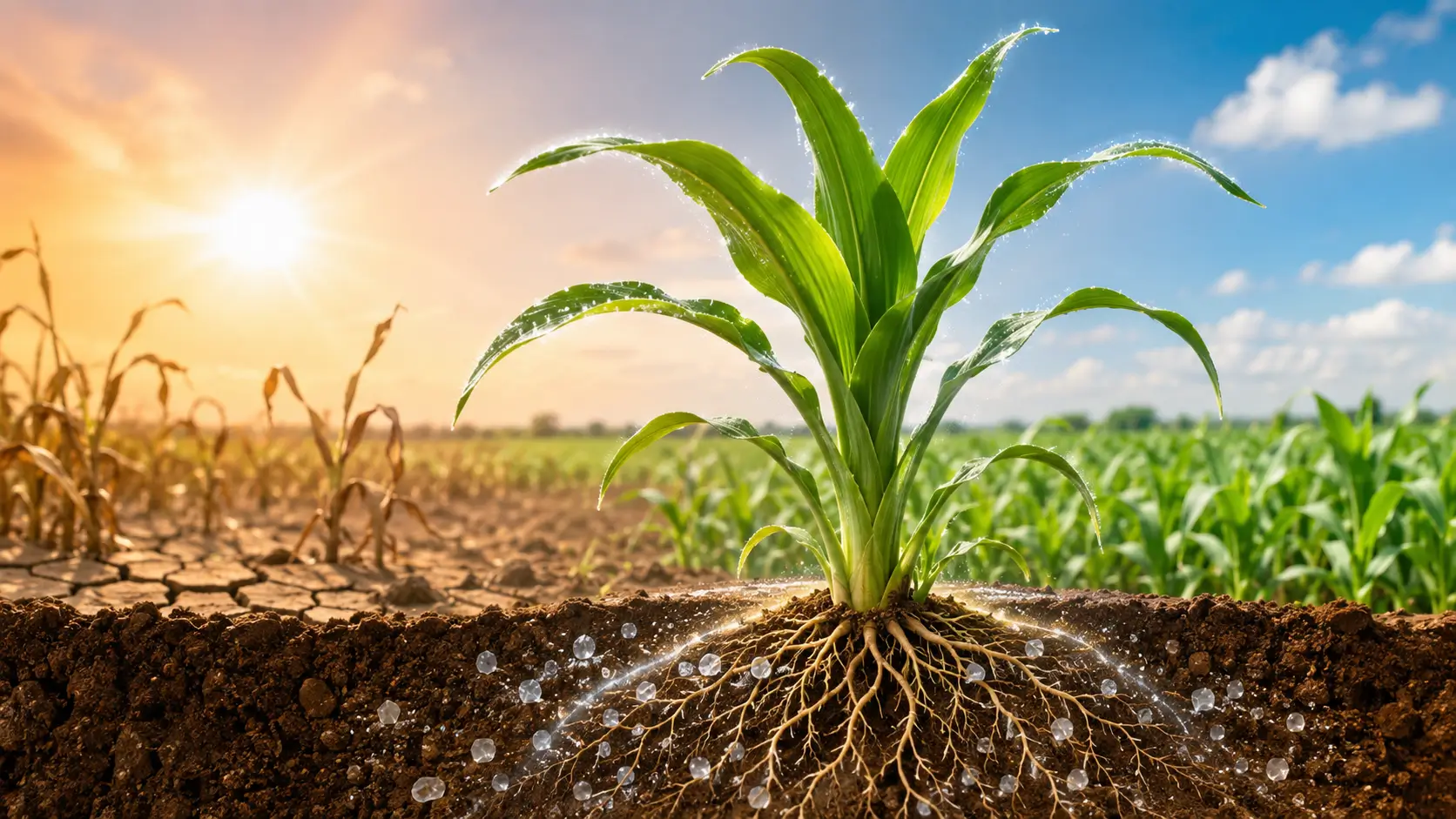
Transpiration Control and Drought Resistance: The thin silica layer accumulated on the leaf surface prevents the plant from losing water uncontrollably through the cuticle layer. Furthermore, silicon accelerates the closing mechanism of the stomata (pores) during extremely hot and dry periods, preventing the plant from entering water stress.
-
Prevention of Heavy Metal Toxicity: Especially in soils with low pH values (acidic), elements like Aluminum and Manganese reach toxic levels for the plant. Silicon combines with these heavy metals in the soil solution or plant tissues, transforming them into harmless and insoluble complexes.
-
Alleviation of Salinity Stress: Excessive salt (Sodium) in the soil prevents the plant from absorbing water and poisons the cells. Silicon restricts sodium uptake in the roots while promoting potassium uptake. This allows the plant to continue growing and photosynthesizing even in saline conditions.
4. Silicon Strategies in Ecological Farming
In ecological farming, it is essential to strengthen the plant’s natural immunity instead of using synthetic chemicals. Therefore, silicon management must be placed at the heart of ecological fertilization programs.
-
Diatomaceous Earth Applications: Composed of the fossilized silica shells of microscopic marine organisms (diatoms) from millions of years ago, diatomaceous earth is both an excellent physical insect repellent and a long-term source of silicon in ecological farming.
-
Foliar Feeding with Potassium Silicate: In moments of acute disease or stress, liquid potassium silicate applications provide instant protection. Foliar-applied potassium silicate quickly settles under the cuticle to form armor and provides the plant with beneficial potassium without the risk of luxury consumption.
-
Mobilizing Soil Microbiology: What converts insoluble silicate rocks in the soil into monosilicic acid that the plant can absorb is microbial activity and organic acids. Increasing soil vitality by using ecological compost, mycorrhizal fungi, and compost teas is the most permanent way to naturally put the massive and dormant silicon reserve in your soil at your plant’s service.