How Soil Compaction Reduces Nutrient Uptake and What to Do About It
Soil compaction is a silent adversary in agriculture, significantly reducing nutrient uptake and impacting crop yield. For growers and agronomists, understanding the implications of soil compaction and how to address it is crucial for maintaining healthy crops and maximizing output.
Understanding Soil Compaction
Soil compaction occurs when soil particles are pressed together, reducing pore space, which affects air and water movement through the soil. This phenomenon can result from heavy machinery, foot traffic, or livestock, and is more prevalent in wet conditions. Compacted soil disrupts the root environment by limiting roots’ access to essential nutrients and water, ultimately stunting plant growth.
The reduction in pore space caused by compaction also leads to poor soil aeration. Roots struggle to access the oxygen they need for respiration, and beneficial microorganisms that aid in nutrient cycling are hindered. Consequently, plants in compacted soils often show signs of nutrient deficiencies, such as yellowing leaves or stunted growth, even when nutrients are present in the soil.
Effects of Soil Compaction on Nutrient Uptake
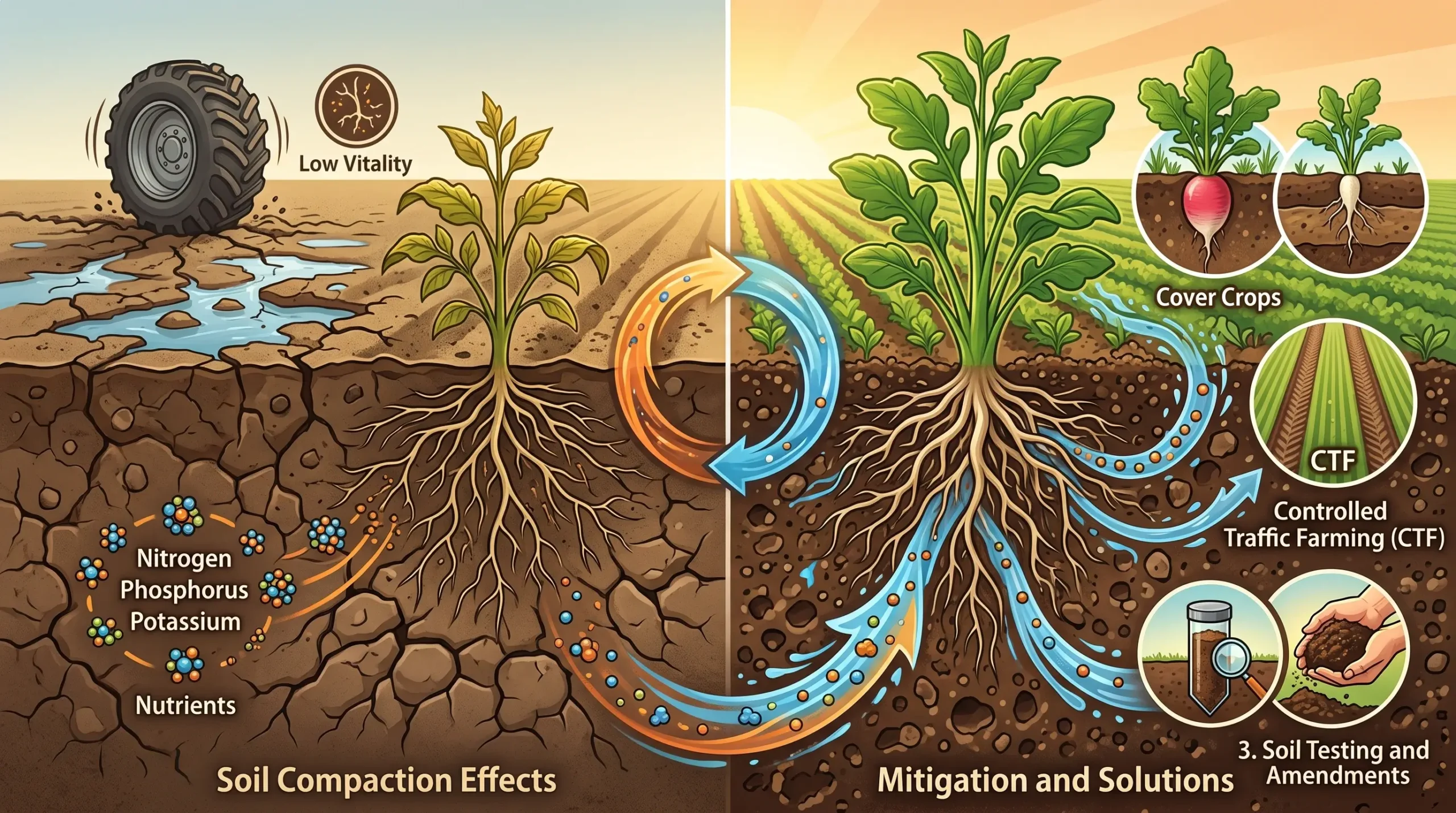
Soil compaction significantly impacts the ability of plants to uptake nutrients. When soil is compacted, the dense soil layers impede root penetration, limiting the root’s reach into the soil profile where nutrients are available. This restriction reduces the plant’s ability to absorb vital nutrients such as nitrogen, phosphorus, and potassium, which are essential for growth and development.
Moreover, compacted soils tend to have poor drainage, leading to waterlogged conditions that can further inhibit nutrient uptake. Excess water can cause root rot and limit the roots’ ability to absorb nutrients effectively. In extreme cases, the lack of oxygen and nutrient flow can lead to plant death, severely affecting crop yields.
Strategies to Mitigate Soil Compaction
To combat the adverse effects of soil compaction and enhance nutrient uptake, growers and agronomists can adopt several strategies. One effective method is to implement controlled traffic farming (CTF). CTF involves restricting machinery movement to specific tracks, thereby reducing the overall area of compacted soil. This practice helps maintain soil structure and improves the root environment.
Another strategy is the use of cover crops. Cover crops, such as clover or radishes, can help break up compacted soil layers with their deep root systems. These plants not only improve soil structure but also enhance organic matter content, promoting better nutrient cycling and uptake.
Additionally, regular soil testing is crucial for identifying compacted areas and determining nutrient deficiencies. Soil tests provide valuable data that can guide the application of appropriate amendments, such as gypsum or organic matter, to improve soil structure and fertility.
Conclusion: Enhancing Nutrient Uptake by Addressing Soil Compaction
Soil compaction reduces nutrient uptake, posing a significant challenge to agricultural productivity. However, by understanding its causes and implementing strategies like controlled traffic farming, cover cropping, and regular soil testing, growers can mitigate the negative impacts of compaction. Addressing soil compaction not only enhances nutrient uptake but also improves overall soil health, leading to more robust and productive crops.
Take action today to assess your fields for soil compaction and consider implementing these strategies to boost your crop yield and soil health. For more personalized advice, consult with an agronomist who can tailor solutions to your specific conditions. Embrace these practices to ensure your crops have the best opportunity to thrive.