

What Does Fertilizer Do? The Key to Agricultural Productivity
Basic Functions and Benefits of Fertilizer
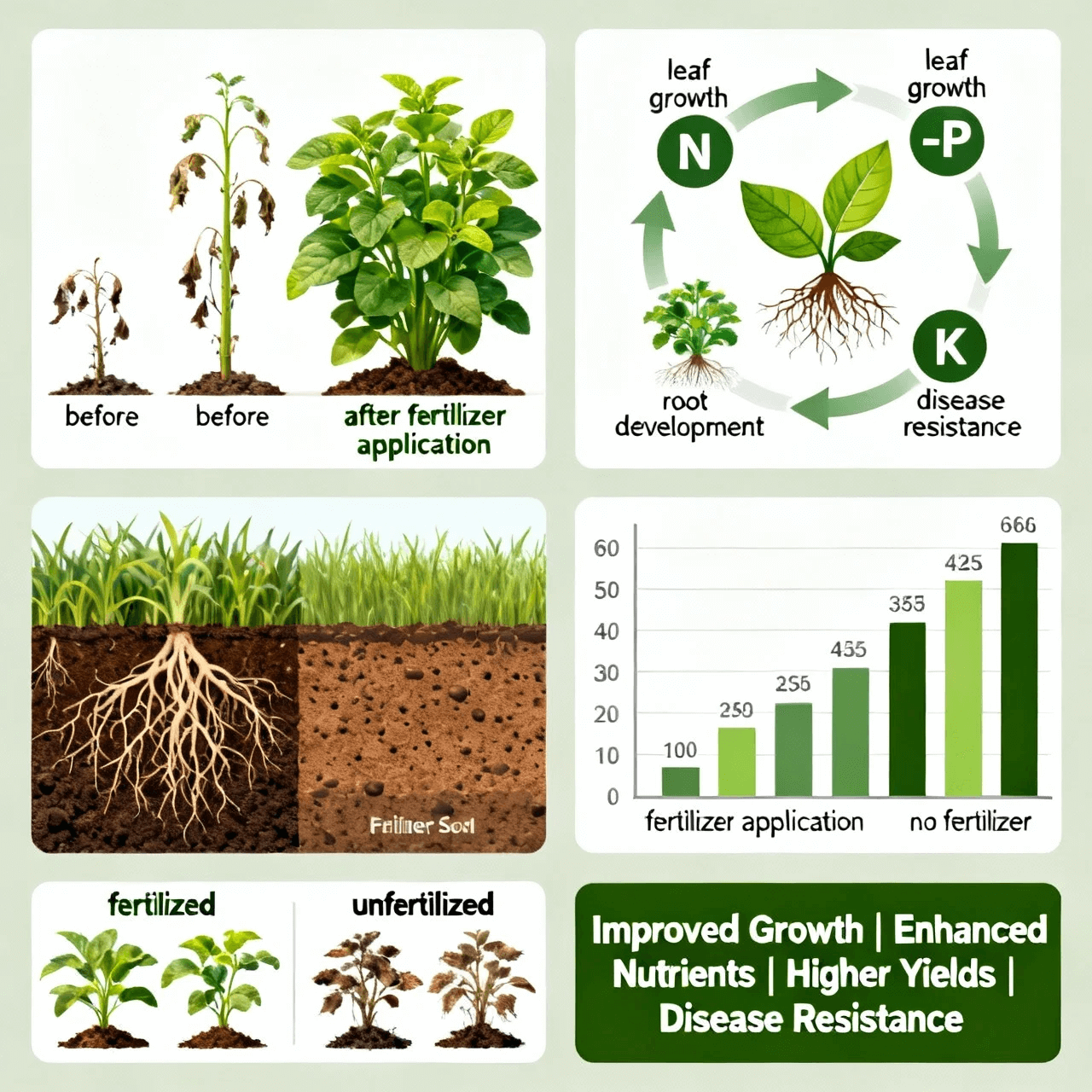
What does fertilizer do is one of the most important topics in modern agriculture. First of all, fertilizer provides essential nutrients needed for healthy plant growth. Additionally, it supports plant development and increases soil fertility. Finally, it improves both quality and quantity in agricultural production.
Farmers primarily use fertilizer to optimize plant nutrition. Moreover, fertilizer improves soil structure and increases microorganism activity. Therefore, it provides the necessary nutrient cycle for sustainable agriculture.
Effects on Plant Growth and Development
Providing Rapid and Healthy Growth
First, fertilizer supports rapid and healthy plant growth. Particularly, nitrogen content accelerates leaf development and keeps the green color dark. In addition, phosphorus strengthens the root system and promotes flowering. At the same time, potassium increases stem strength and enhances disease resistance.
For this reason, the balanced combination of nutrients supports all developmental stages of the plant. For example, it provides optimal nutrition from germination to harvest time at every stage. As a result, plants can use their genetic potential to the maximum level.
Increasing Photosynthesis Efficiency
Fertilizer application optimizes the photosynthesis process. Especially, nitrogen increases chlorophyll production, allowing leaves to use sunlight more effectively. Furthermore, magnesium plays a critical role as the central atom of the chlorophyll molecule.
Moreover, micro elements like iron and manganese increase the activity of photosynthesis enzymes. This way, plants convert solar energy to carbohydrates more efficiently. Therefore, increased photosynthesis capacity directly affects growth rate and biomass production.
Benefits on Soil Health and Structure
Supporting Soil Microorganisms
First, organic fertilizers feed and multiply soil microorganisms. Particularly, bacteria, fungi, and other microorganisms decompose organic matter making nutrients available for plants. For this reason, this process protects soil ecosystem health.
Additionally, microorganism activity improves soil aggregation. Thus, soil structure becomes looser and more aerated. As a result, water infiltration increases and erosion risk decreases. Therefore, healthy soil microbial life is the foundation of sustainable agriculture.
Regulating pH Balance
Fertilizer application optimizes soil pH. For example, lime-containing fertilizers raise pH in acidic soils. On the other hand, sulfur-containing fertilizers increase acidity in alkaline soils. For this reason, the optimal pH range (6.0-7.0) ensures maximum nutrient availability.
Moreover, pH balance affects the chemical forms of nutrients. Because at wrong pH values, some elements become unavailable to plants. Therefore, with correct pH, fertilizer efficiency reaches maximum level and nutrient losses are minimized.
Yield Increase and Quality Improvement
Increasing Crop Quantity
First, fertilizer use significantly increases agricultural yield. Particularly, with correct fertilizer programs, yield increase can vary between 30-60%. However, this rate differs according to soil condition, climate conditions, and plant type.
On the other hand, yield increase becomes more dramatic in soils with nutrient deficiencies. For example, when nitrogen deficiency is corrected, striking increases are observed in grain production. Similarly, in soils where phosphorus deficiency is corrected, root crops and legumes show high yield increases.
Improving Product Quality
Fertilizer improves not only quantity but also product quality. First, protein content, vitamin values, and mineral concentration increase. Additionally, taste, aroma, and visual quality improve in fruits and vegetables. Moreover, protein ratio and gluten quality improve in grains.
For this reason, quality products have higher market value. Because they can be sold in premium product category and better prices can be obtained. Therefore, this situation increases producer income and accelerates fertilizer investment return.
Strengthening Disease and Pest Resistance
Supporting Plant Immune System
First, balanced fertilizer application strengthens the plant immune system. Particularly, potassium thickens cell walls and makes pest entry difficult. At the same time, calcium maintains cell integrity and creates barriers against disease agents.
Moreover, silicon-containing fertilizers create a protective layer on leaf surfaces. For this reason, this layer prevents fungal spore attachment and reduces disease transmission risk. As a result, strong plants better withstand stress conditions.
Reducing Pesticide Need
Well-nourished plants have high natural resistance against diseases and pests. For this reason, this situation reduces chemical pesticide use need. Additionally, fertilizer plays an important role in integrated pest management programs.
Therefore, reduced pesticide use both provides cost advantage and protects environmental health. Moreover, pesticide residue risk decreases in products and food safety increases. Especially in organic farming systems, this situation is even more critical.
Providing Resistance to Stress Conditions
Protection Against Drought Stress
First, fertilizer application increases plants’ resistance to drought stress. Particularly, potassium improves stomatal control and reduces water loss. Additionally, deep root development facilitates access to water sources.
Moreover, fertilizers with high organic matter content increase soil’s water holding capacity. This way, plants can survive longer during dry periods. Therefore, productivity is maintained even under water stress.
Adaptation to Temperature Stress
Balanced nutrition increases tolerance against temperature stress. For example, enzymes that prevent protein denaturation at high temperatures remain active. On the other hand, cell membrane flexibility is maintained at low temperatures.
Especially micronutrients play critical roles under stress conditions. Because zinc and manganese maintain enzyme activities. At the same time, boron provides cell wall stability and increases stress tolerance.
Specific Functions of Different Fertilizer Types
Multi-faceted Benefits of Organic Fertilizers
First, organic fertilizers provide long-term nutrition with slow-release properties. Additionally, they improve soil structure and increase water holding capacity. Moreover, they support microorganism activity and protect soil ecology.
Particularly, compost, farm manure, and green manure offer different advantages. For example, compost provides balanced nutrient content. Similarly, farm manure increases organic matter ratio. Finally, green manure performs nitrogen fixation and provides soil cover.
Quick Effects of Chemical Fertilizers
Chemical fertilizers provide quick and predictable results. Because nutrients are found in easily absorbable forms. For this reason, they meet urgent nutrient needs and provide rapid intervention opportunity.
Especially NPK fertilizers contain basic macro nutrients in balanced form. On the other hand, single-nutrient fertilizers correct specific deficiencies. Additionally, slow-release chemical fertilizers provide long-term effects.
Economic Benefits and Cost Effectiveness
Investment Return Calculation
First, fertilizer investment generally pays for itself in a short time. Particularly, income obtained from yield increase can exceed fertilizer cost by 2-3 times. Additionally, quality increase also creates additional economic value.
For this reason, cost-benefit analysis is important in fertilizer selection. Because expensive fertilizers may not always be the most profitable option. Therefore, optimized fertilizer programs according to soil analysis results are the most economical solution.
Long-term Economic Gains
Regular fertilizer use protects and increases soil fertility. For this reason, this situation raises land value and provides long-term investment return. Additionally, sustainable production creates future income security.
On the other hand, preventing soil degradation prevents major economic losses. Because soil lost through erosion cannot be replaced. Therefore, protecting soil health with fertilizer is a strategic investment.
Positive Effects on Environment
Carbon Sequestration and Climate Change
First, organic fertilizers increase carbon storage in soil. For this reason, this process reduces CO2 amount in atmosphere and contributes to fighting climate change. Additionally, soil organic carbon remains stable for long periods.
Particularly, healthy soils can store more carbon. Because microorganism activity optimizes carbon cycle. Therefore, this process is beneficial for both environment and agriculture.
Protecting Biodiversity
Balanced fertilizer use supports soil biodiversity. For this reason, different microorganism species develop and ecological balance is maintained. Additionally, this situation also supports natural enemy populations.
On the other hand, reduced pesticide use protects beneficial insects. For example, bees, wild bees, and other pollinators live in safe environments. As a result, ecological farming systems strengthen.
Fertilizer Application Timing and Effectiveness
Seasonal Application Strategies
Farmers should plan fertilizer application according to plant development periods. For example, spring application supports growing season. On the other hand, autumn application provides winter preparation and root development.
Particularly, phosphorus application before flowering increases fruit set. Additionally, potassium during fruit development improves quality. Finally, post-harvest application prepares for next season.
Adaptation to Soil and Climate Conditions
Soil type affects fertilizer selection. For example, slow-release fertilizers are preferred in clay soils. On the other hand, frequent and low-dose applications are made in sandy soils.
Additionally, climate conditions determine application timing. Because fertilizer losses increase during rainy periods. For this reason, application is made with irrigation during dry periods. Therefore, temperature affects fertilizer solubility.
Future Fertilizer Technologies and Innovations
Smart Fertilizer Systems
First, nanotechnology is transforming the fertilizer sector. Particularly, nano fertilizers provide targeted release and minimize losses. Additionally, they release nutrients according to plant needs.
Moreover, encapsulated fertilizers show activity according to environmental conditions. For example, they respond to moisture, temperature, and pH changes. For this reason, this technology maximizes fertilizer efficiency.
Biological Fertilizer Alternatives
Microorganism-based fertilizers are gaining popularity. Particularly, nitrogen-fixing bacteria reduce chemical nitrogen need. At the same time, phosphate-solubilizing bacteria increase phosphorus uptake.
Additionally, mycorrhiza inoculation expands root system. This way, nutrient and water uptake increases. Therefore, biological fertilizers offer environmentally friendly and sustainable solutions.
Common Fertilizer Use Mistakes and Solutions
Harms of Excessive Fertilizer Use
The thinking “more fertilizer is better” is wrong. Because excessive fertilizer harms plants and causes environmental pollution. Additionally, salt accumulation leads to root burns.
On the other hand, nutrient imbalance causes antagonistic effects. For example, excess nitrogen prevents potassium uptake. Similarly, excess phosphorus leads to zinc deficiency. For this reason, balanced nutrition is critically important.
Correcting Wrong Application Techniques
Fertilizer application requires technical knowledge. Because surface application causes losses. On the other hand, mixing into soil increases effectiveness. Additionally, application with irrigation gives optimum results.
Particularly, weather conditions should be considered. For example, dust fertilizer application should not be done in windy weather. Similarly, application before rain causes losses. For this reason, correct timing is critical.
Conclusion and Recommendations
Fertilizer is an indispensable element of modern agriculture. First, it supports plant growth, increases yield, and improves quality. Additionally, it protects soil health and provides sustainable production. Finally, it strengthens disease resistance and increases stress tolerance.
For successful fertilizer use, first perform soil analysis. Then determine plant needs and prepare balanced programs. Particularly, pay attention to application timing and consider environmental conditions. Finally, get expert support and be open to continuous learning.


