Plant Diseases and Natural Biological Control: Disease Management in Ecological Agriculture
Plant diseases are among the most serious threats to agricultural production. Fungal, bacterial, viral diseases, and harmful insects can dramatically reduce crop yields and cause total product loss. In conventional agriculture, synthetic chemical pesticides have been used to combat these problems. However, the damage that chemical pesticides cause to the environment, consumer health, and soil biology has made the development of alternative methods necessary. Natural biological control is one of the cornerstones of ecological agriculture. In this article, we will examine in detail the causes and impacts of plant diseases and natural biological control methods.
Causes and Types of Plant Diseases
Plant diseases can be classified into three main categories:
1. Fungal Diseases
Fungal diseases are the most common diseases in plants. Fungi love moisture and moderate temperatures. Examples:
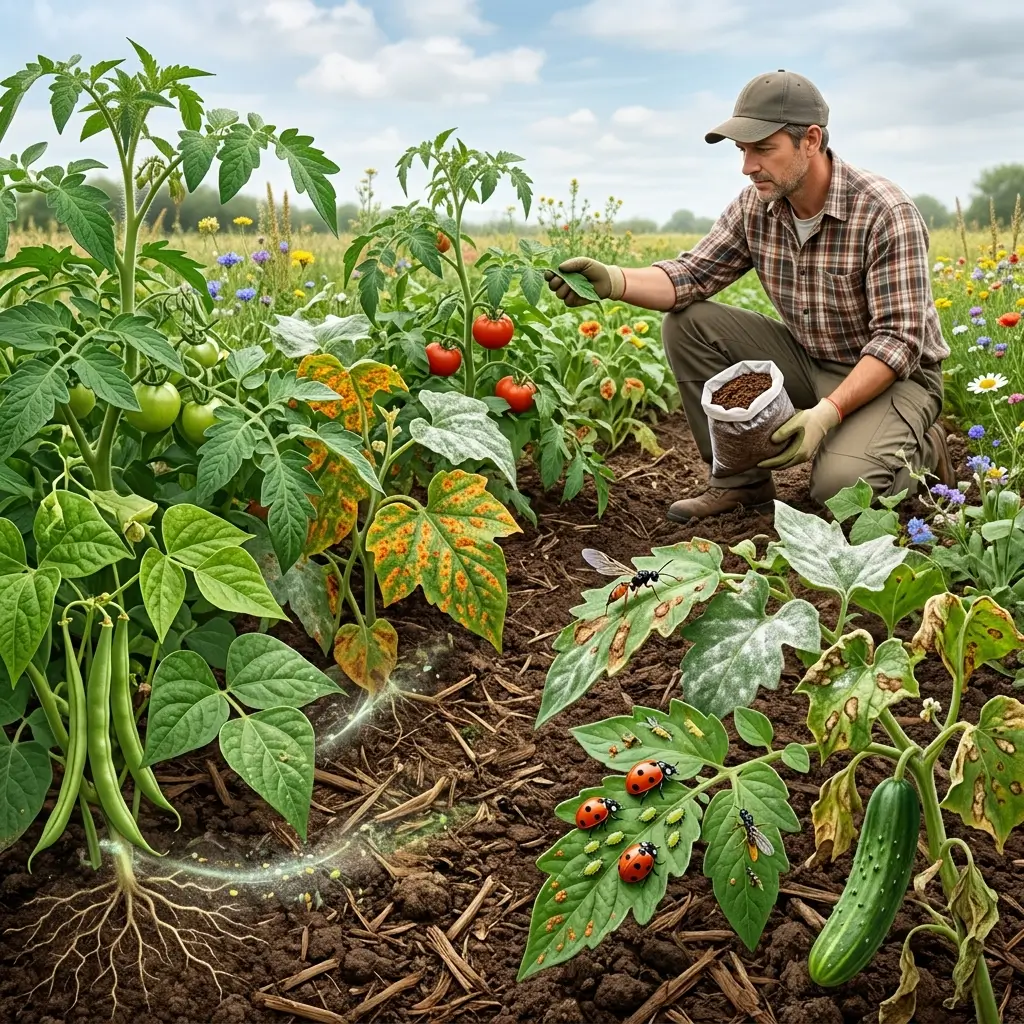
- Downy mildew (Peronospora): Yellow spots on leaves, white mold on the underside
- Rust: Orange or reddish dusty structure on leaves
- Powdery mildew: White powder-like coating on leaves
- Fusarium: Root rot, plant wilting
- Botrytis (Gray mold): Black-gray mold on fruits
2. Bacterial Diseases
Although less common, bacterial diseases can cause serious crop losses. Examples:
- Bacterial leaf blight: Brown spots with black edges on leaves
- Wilt disease: Plant completely wilts and dies
- Plant rots: Stem or root rot
3. Viral Diseases
Viral diseases show mosaic patterns, leaf curling, dwarfing in plants. Viruses are usually spread by vectors like aphids.
4. Harmful Insects
Harmful insects are also important agricultural disease factors:
- Aphids: Weaken plants by sucking sap
- Caterpillars: Damage by eating leaves
- Spider mites: Feed by spinning fine webs on leaves
- Whiteflies: Cause spots and spread viruses on leaves
- Scale insects: Red spider-like types
Effects of Plant Diseases
Plant diseases cause various problems:
- 30-80% reduction in crop yield
- Decreased product quality
- Increased post-harvest losses
- Reduced efficiency of agricultural inputs (fertilizers, water)
- Increased costs
- Economic damage to farmers
Natural Biological Control Strategy 1: Cultural Practices
Preventing disease from occurring is much more effective than treating it. Cultural practices:
Selection of Disease-Resistant Varieties
- Local farmers’ long-used plant varieties resistant to disease are selected
- If possible, disease-resistant hybrid varieties are preferred
Appropriate Crop Rotation
- Same family plants are not planted in consecutive years
- At least 3-4 years gap is maintained
- This prevents soil-borne disease initiation
Cleanup of Diseased Plant Residues
- After harvest, diseased plant residues are removed from the field
- They are burned or composted (in a controlled manner)
- Plant residue adhering to tools and machines is cleaned
Proper Water Management
- Excess water promotes multiplication of fungal diseases
- Water is applied at plant base, not on leaves
- Drip irrigation is used
- Watering is done early in the morning, not in the evening
Appropriate Plant Spacing
- If plant spacing is too tight, air circulation is weak, diseases increase
- Proper spacing is maintained between plants
Strategy 2: Beneficial Insects (Natural Enemy Organisms)
Harmful insects have natural enemies. Inviting these enemies to farmland provides biological control:
Ladybugs (Coccinellidae)
- Very effective against aphids
- One adult ladybug can consume 50-60 aphids per day
- If flowering plants (dill, parsley, fennel) are planted in the garden, ladybugs come naturally
Hoverflies
- Larvae attack aphids
- Flowering plants are not kept away from farming; rather, they are attracted
- They are drawn to light and odors
Parasitoid Wasps
- Very small wasps exist
- They lay eggs inside harmful insects
- Egg-laying insects die
Predatory Insects
- Aggressive insects hunt pests
- For example, ground beetles hunt caterpillars
To support beneficial insects:
- Various flowering plants are planted
- Pesticide use is avoided
- Stones or other materials are left under plants (hiding places)
Strategy 3: Using Microorganisms and Biological Agents
In nature, there are beneficial microorganisms that control disease-causing organisms:
Bacillus thuringiensis (Bt)
- A bacterium that kills caterpillars
- Considered natural and organic
- Releases spores and toxins
- Effective on caterpillar farms, harmless to humans and beneficial insects
Trichoderma
- Effective against fungal diseases
- Naturally found in soil
- Applied to plant roots
- Attacks fungal disease pathogens
Streptomyces
- An antibiotic-producing actinomycete
- Effective against fungal and bacterial diseases
Pseudomonas and Bacillus
- Naturally occurring beneficial bacteria in soil
- Placed on plant roots to provide protection
Commercial forms of these organisms (biological inoculants) are available and can be used.
Strategy 4: Natural Plant Extracts and Essences
Some plants naturally contain substances that control insects and diseases:
Nicotine
- Obtained from tobacco leaves
- Effective against insects
- Used carefully as it is highly toxic
Pyrethrin
- Obtained from daisy-type plants
- Effective against harmful insects
- Low toxicity to humans and animals
Neem Oil
- Obtained from neem tree seeds
- Effective against many harmful insects and fungal diseases
- Disrupts the plant’s feeding habits, causing death
Sulfur
- Classic fungal disease control
- Very effective against powdery mildew and rust diseases
- Natural product with low toxicity
Copper Fungicide
- Copper compounds are effective against fungal and bacterial diseases
- Bordeaux mixture (copper sulfate + lime) is a classic application
- Can be legally used in organic farming
Strategy 5: Increasing Physiological Resistance
Strong and healthy plants are more resistant to diseases:
Proper Nutrition
- Complete meeting of plants’ macro and micronutrient needs
- Potassium-rich fertilization increases plant disease resistance
- Excessive nitrogen fertilization makes plants soft and disease-prone
Light and Air Circulation
- Adequate light and air circulation reduce fungal diseases
- Shaded environments promote disease
- Appropriate leaf density is maintained
Preventing Water Stress
- Drought weakens plants, making them disease-prone
- Proper irrigation keeps plants strong
Strategy 6: Integrated Pest Management Plan (IPM)
Integrated Pest Management combines all strategies:
- Monitoring: Farm area is regularly inspected, disease symptoms are detected early
- Forecasting: Disease risk is predicted in advance based on climate and weather conditions
- Decision Threshold: When certain disease levels are observed, control measures begin
- Multi-faceted Control: Cultural practices, biological control, natural products combination is used
- Record Keeping: Applied measures and their results are recorded
Conclusion: Sustainable Disease Management Through Natural Biological Control
Plant diseases are an unavoidable problem in agriculture. However, instead of relying on chemical pesticides, farmers using natural biological control methods can obtain healthier products, lower production costs, and a more sustainable farming system. Cultural practices, beneficial insects, biological agents, natural plant extracts, and physiological resistance, when used together, are quite effective in disease management. Every farmer should develop a comprehensive biological control strategy suited to their field and conditions.