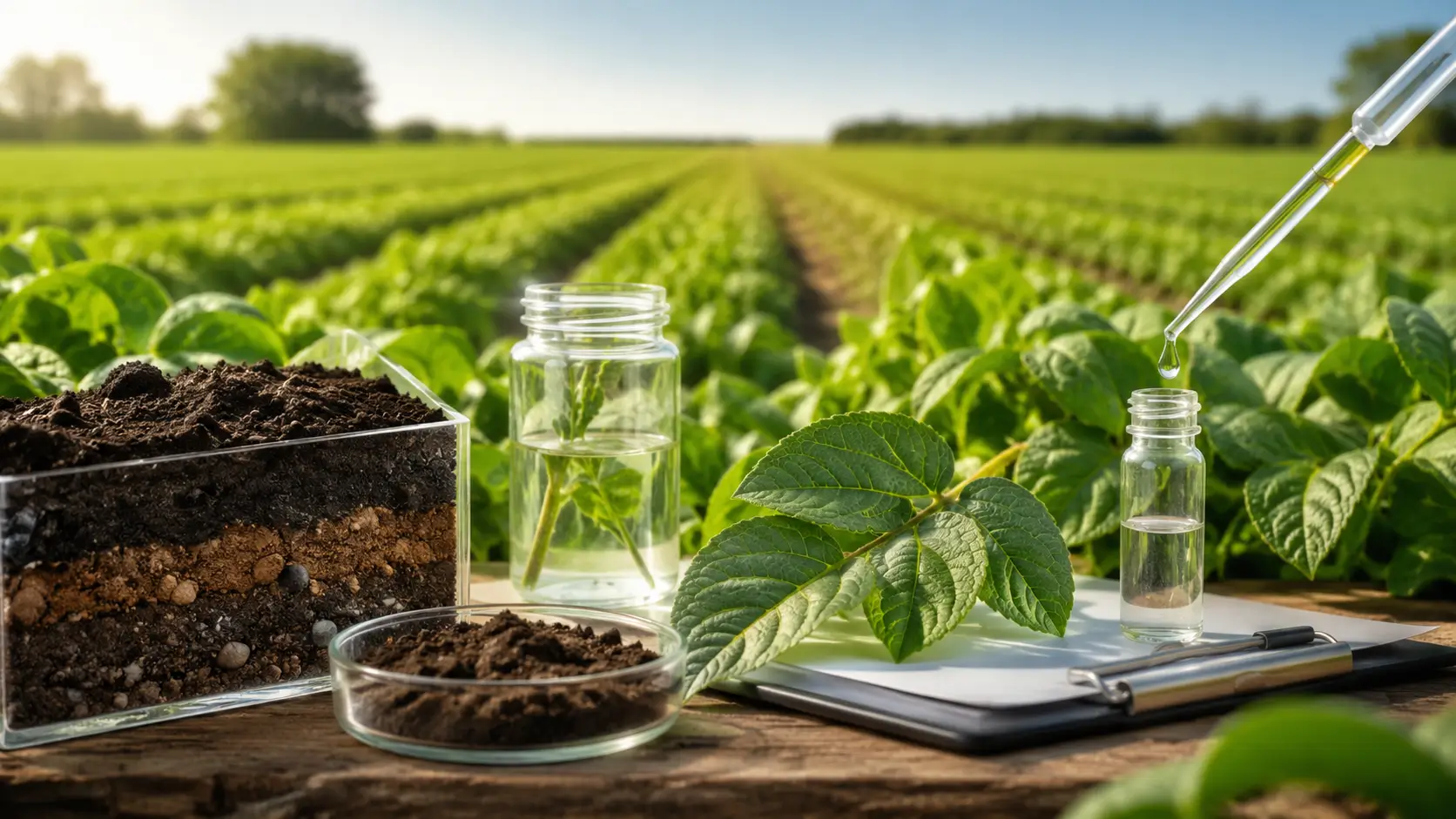
Soil Rehabilitation Indicators: How Do We Measure Soil Health?
Agricultural production is built on our valuable natural resource—soil. However, intensive and unconscious agricultural practices, excessive use of chemical fertilizers and pesticides, mechanical operations, and erosion have caused soils to deteriorate, erode, and lose their productivity over time. At this point, soil rehabilitation becomes critically important. However, to measure and monitor the success of rehabilitation efforts, scientific and objective indicators are necessary. In this article, we will examine the important indicators of soil rehabilitation in detail.
Why Does Soil Deteriorate?
Soil deterioration is triggered by various factors. Intensive farming causes continuous nutrient extraction from soil and loss of organic matter. Monoculture (single crop) practices reduce the diversity of microorganisms in soil. Heavy mechanical operations compact soil structure, preventing air and water penetration. Soil loss from erosion causes widespread soil degradation. Problems such as salinity, acidification, and chemical contamination seriously reduce soil quality.
Key Indicators of Soil Rehabilitation
1. Soil Structure
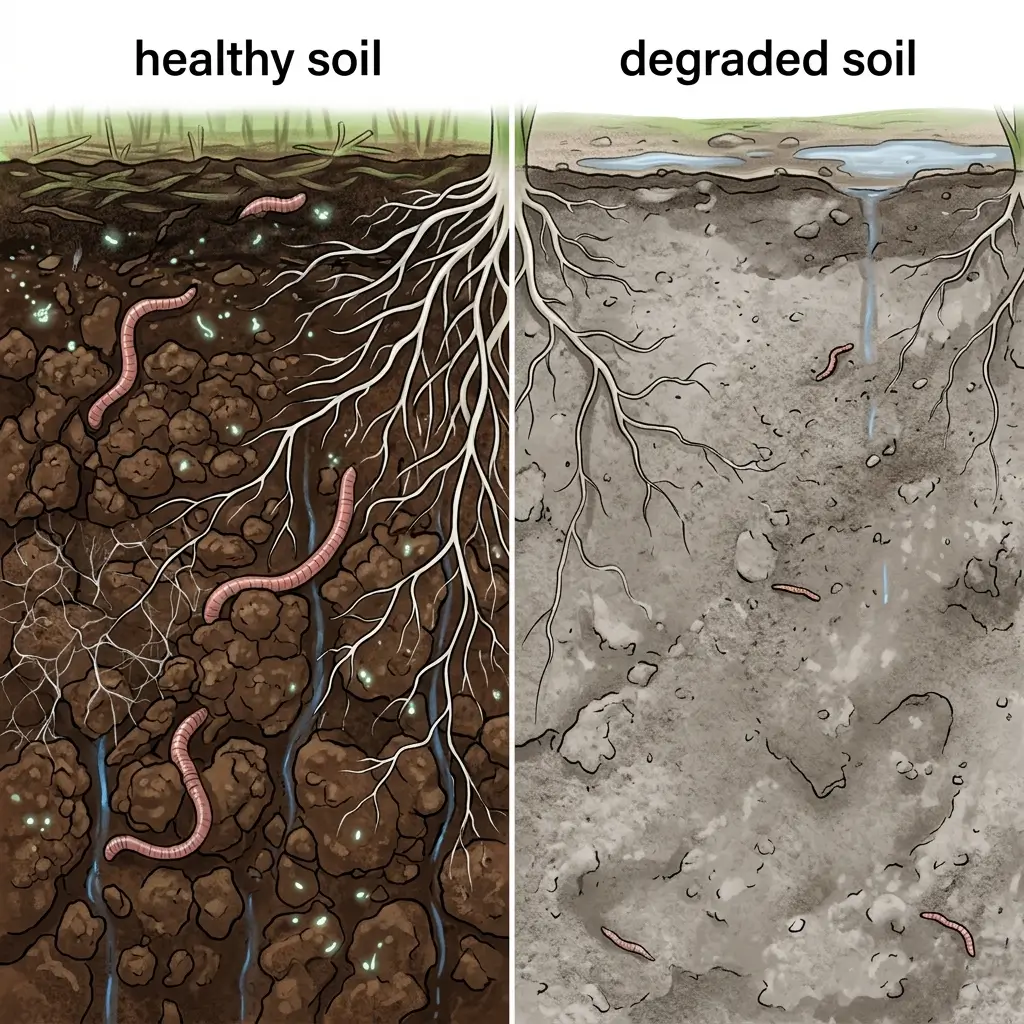
Soil structure is one of the most important physical properties determining soil quality. Good soil structure facilitates root penetration and provides air and water flow. If soil structure is poor, soil becomes compacted, impermeable, and root development is hindered.
To improve soil structure:
- Addition of organic matter (compost, animal manure)
- Transition to reduced tillage or no-till methods
- Implementation of crop rotation
- Use of mulching (straw cover)
Soil structure can be observed visually (size and stability of soil aggregates) or measured using a penetrometer.
2. Organic Matter Content
Organic matter is the leading indicator of soil quality. Organic matter:
- Improves soil structure by increasing aggregate stability
- Increases soil water-holding capacity (providing water to plants during dry periods)
- Supports beneficial microorganisms (bacteria, fungi)
- Increases nutrient storage capacity (Cation Exchange Capacity – CEC)
- Balances soil pH
In healthy agricultural soils, organic matter should be at least 3-5%. In most agricultural areas, organic matter has dropped below 1%. To increase organic matter:
- Apply compost
- Use animal manure
- Return crop residues to soil
- Sow green manure crops (planting legume family plants then returning to the field)
Organic matter is analyzed by laboratory and measured using the Walkley-Black method.
3. Soil pH
Soil pH directly affects the availability of nutrients for plant uptake. High pH (alkaline soils) makes phosphorus, potassium, iron, zinc, and similar elements unavailable to plants. Low pH (acidic soils) can cause aluminum and manganese poisoning.
Healthy soil pH should be between 6.0-7.5 (varies with crop). pH adjustment:
- In acidic soils: Application of lime (CaCO₃)
- In alkaline soils: Application of sulfur (S) or increasing organic matter
pH can be measured with a portable pH meter or laboratory.
4. Soil Biological Activity
Soil is an ecosystem harboring millions of living organisms. Bacteria, fungi, protozoa, nematodes, and macrofauna (insects, earthworms) play critical roles in nutrient circulation in soil.
Biological activity indicators:
- Earthworms (especially Lumbricus species) should be present in high numbers
- Soil fungi (mycorrhizal fungi) should be connected to roots
- Bacteria and actinomycetes should have high populations
Biological activity can be evaluated by:
- Measuring soil respiration (CO₂ release)
- Measuring enzyme activity (dehydrogenase, arylsulfatase)
- Measuring biomass (soil C:N ratio)
- Visually counting earthworm numbers
5. Soil Stability and Erosion Resistance
Soils with good soil structure are resistant to rainfall and wind erosion. Soil stability is measured by:
- Water drop stability: Testing how resistant soil aggregates are when water is carefully dropped on soil
- Wet sieve analysis: Analyzing the distribution of soil aggregates in wet conditions
Soils with high stability have high erosion resistance. These soils should be protected with green vegetation (grass or trees).
6. Permeability and Drainage
Compacted soils do not allow water and air passage. Permeability shows how quickly soil allows water and air passage. Low permeability:
- Increases root rot risk
- Creates water accumulation in soil
- Prevents air penetration
Permeability is measured by:
- Infiltrometer (measuring how quickly water seeps into soil)
- Visual observation of soil compaction degree
7. Biodiversity
A healthy soil ecosystem should have high biodiversity. Agricultural practices should not affect biodiversity or should increase it. In soil:
- Numerous bacterial species
- Various fungal species
- Earthworm populations
- Arthropod diversity
To preserve and increase this diversity:
- Minimize chemical pesticide use
- Implement crop rotation
- Add organic matter
- Maintain tree and shrub areas in agricultural fields
8. Carbon Sequestration Capacity
Soil can be a tool against climate change by storing atmospheric CO₂. Organic matter-rich soils can store more carbon. Soil carbon:
- Is a portion of CO₂ that plants absorb from the atmosphere through photosynthesis
- Is maintained in soil through organic matter
- Carbon sequestration plays an important role in combating climate change
Monitoring Rehabilitation Success
Soil rehabilitation programs should cover at least 3-5 year periods. To monitor success:
- Initial (baseline) measurements should be taken
- Annual or seasonal measurements should be repeated
- Final results should be compared to targets
- Written records should be maintained
When rehabilitation success is seen, plant yield will increase, nutrient uptake will improve, disease risk will decrease, and agricultural inputs (fertilizers, pesticides) will become more effective.
Conclusion
Soil rehabilitation not only increases agricultural productivity but also ensures environmental sustainability. To monitor soil health, the indicators mentioned above should be used for scientific and objective assessment. Every farmer should regularly monitor the soil health status of their agricultural land and carry out necessary improvement work.