Antagonism in Plant Nutrition: How Do We Prevent the Clash of Elements?
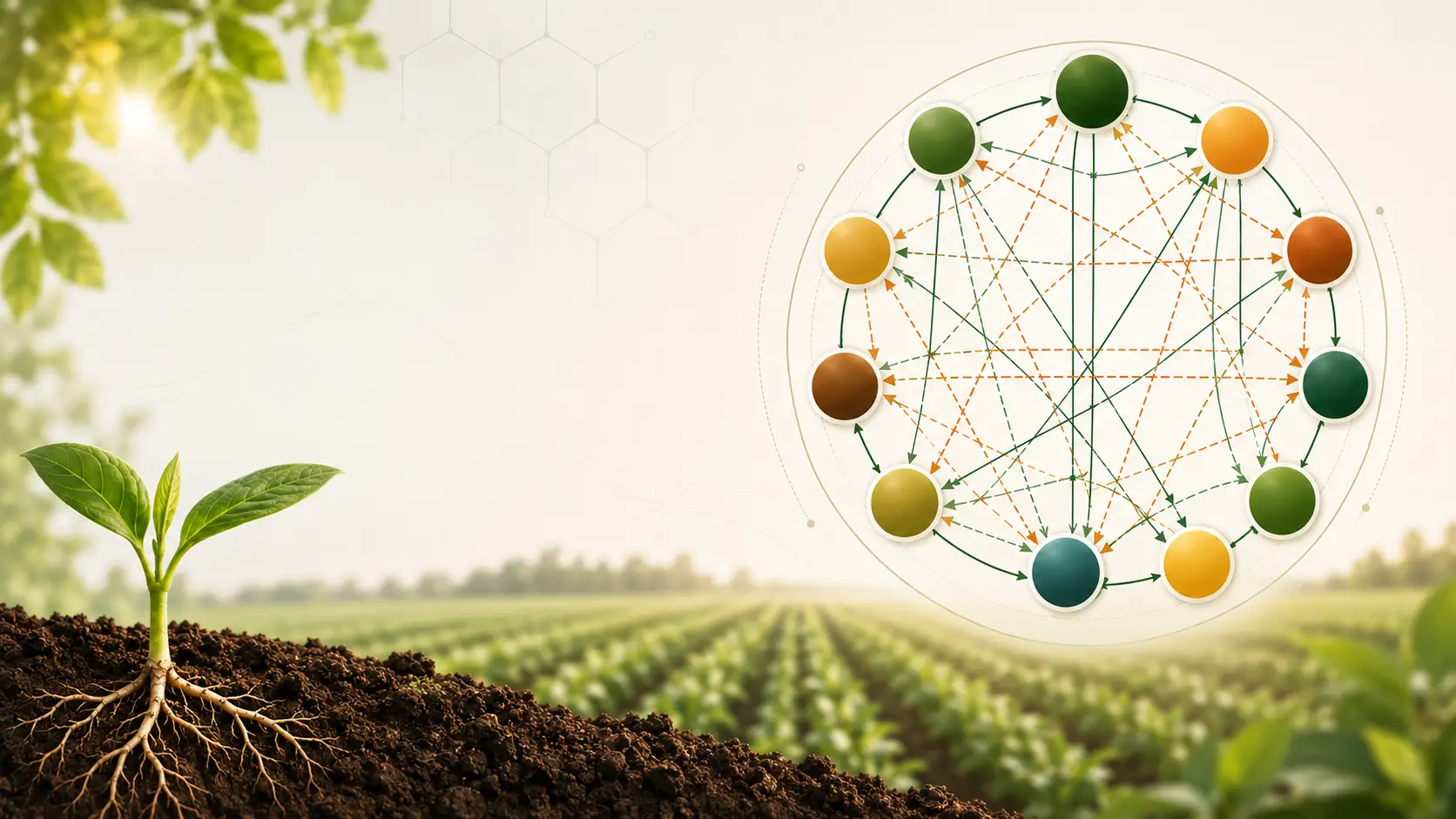
“Antagonism in Plant Nutrition: How Do We Prevent the Clash of Elements?” is the most important key to achieving optimum yield in ecological farming by ensuring that nutrients in the soil are transported to the plant in a balanced way without hindering each other. Soil is a living system where highly complex chemical and biological processes take place. It is well known that plants need macro and micro elements for healthy growth within this system. However, a detail often overlooked by producers is that these elements are in constant interaction with each other in the soil. Antagonism represents the negative aspect of this interaction.
What is Antagonism and How Does it Work in the Soil? In its simplest terms, antagonism is a situation where an excessive or unbalanced presence of one nutrient in the soil prevents, locks, or suppresses the uptake of another nutrient by plant roots. Minerals in the soil have opposite or identical electrical charges. Sometimes these charges compete with each other for absorption sites on the root surface. While the dominant element in the environment wins the race and enters through the root, the other vital element cannot be taken up by the plant even though it is abundant in the soil. This leads to negative consequences such as growth retardation, slowdown in photosynthesis, and low yield. This is the main reason why “balanced and proportional” feeding, rather than just heavy fertilization, is essential in ecological farming.
Most Common Antagonistic Relationships In the field, it is observed that some elements severely clash with each other, especially as a result of incorrect irrigation or unconscious fertilization practices. The most well-known are:
-
Calcium (Ca) vs. Potassium (K) and Magnesium (Mg): This is the most common problem, especially in calcareous soils or soils with very high calcium content. Calcium ions create such a dominant environment around the root that the plant cannot absorb the potassium it desperately needs for fruit growth and the magnesium essential for chlorophyll synthesis.
-
Phosphorus (P) vs. Zinc (Zn) and Iron (Fe): Dense phosphorus sources applied uncontrollably to the soil combine with zinc and iron to turn into insoluble forms. Even if the plant is saturated with phosphorus, severe chlorosis (yellowing) is seen in the top leaves due to iron deficiency.
-
Nitrogen (N) vs. Copper (Cu) and Boron (B): Excessive nitrogen feeding accelerates the shoot development of the plant while weakening the transport of boron, which participates in the cell wall structure. This results in plants with loose tissues and extremely poor stress tolerance.
Synergism: The Antidote to Antagonism Synergism, the exact opposite of antagonism, is when the presence of one nutrient facilitates and stimulates the uptake of another. The main goal of ecological farming is to create this synergistic environment. For example, sufficient sulfur (S) increases the efficiency of nitrogen (N).
Strategies to Break Antagonism in Ecological Farming
-
Soil and Leaf Analysis: Making blind applications is the number one cause of antagonism.
-
Use of Organic Matter and Humic/Fulvic Acid: Humic acids hold clashing elements with organic bonds (chelating), preventing them from blocking each other.
-
Balanced Feeding Programs: When applying an element to the soil, the program should be made foreseeing that the uptake of its opposing element will decrease.
-
pH Optimization: Keeping the pH level in the ideal range of 6.0 – 7.0 prevents many antagonistic lock-ups from occurring in the first place.