How to Improve Nitrogen Fertilizer Efficiency: Form, Timing, and Application Method
Nitrogen is a key nutrient for plant growth, but maximizing its efficiency can be challenging. With ever-increasing costs and environmental concerns, improving nitrogen fertilizer efficiency is essential for sustainable agriculture. By focusing on the form, timing, and application method of nitrogen fertilizers, growers can enhance crop health while minimizing waste and environmental impact.
Understanding the right approach to nitrogen fertilizer can be a game-changer for your crops. Let’s delve into the best practices for optimizing nitrogen use in your fields.
Form of Nitrogen Fertilizer
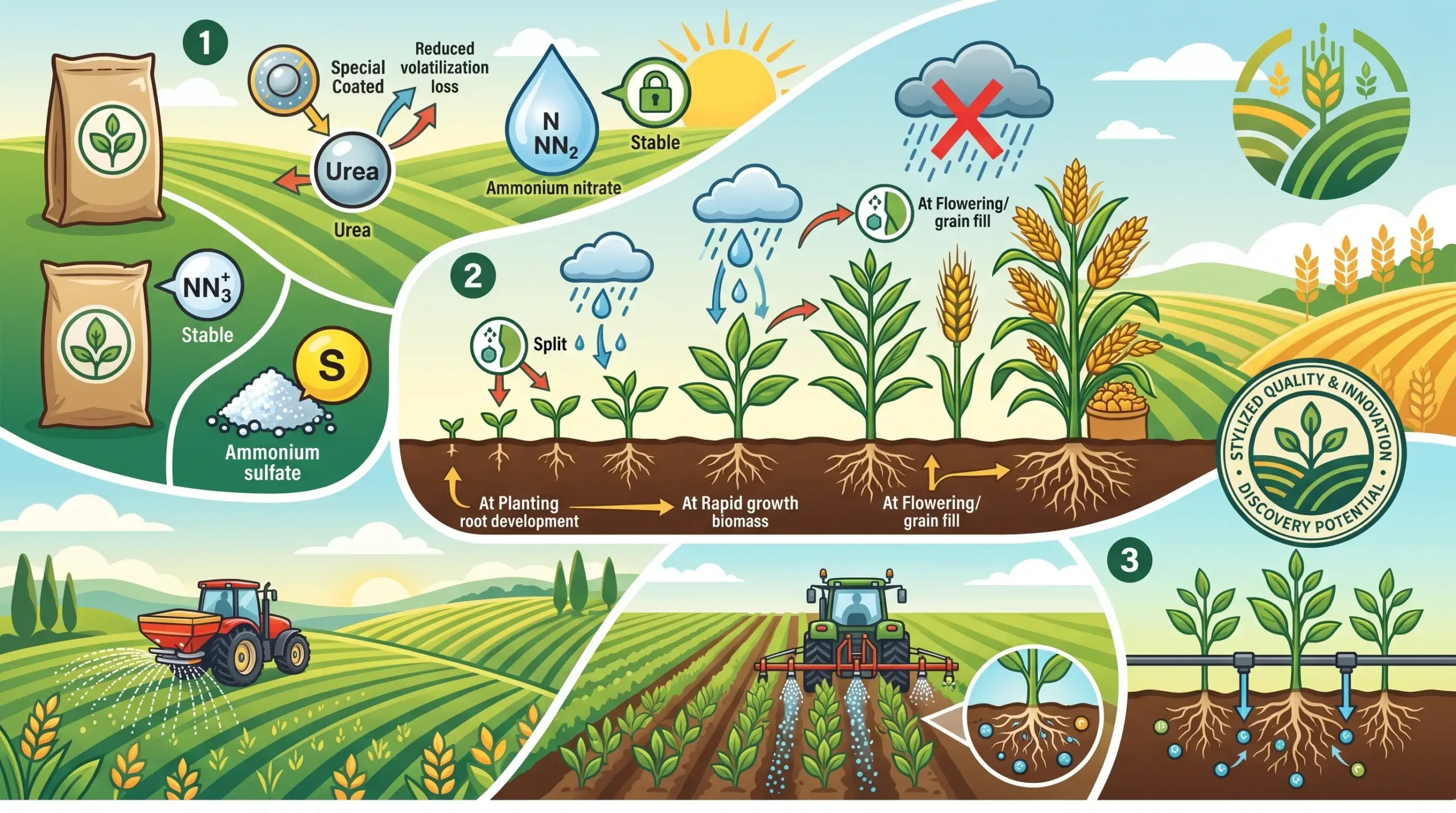
Selecting the right form of nitrogen fertilizer is the first step towards improving efficiency. Common forms include urea, ammonium nitrate, and ammonium sulfate. Each has its own set of advantages and potential drawbacks.
Urea is widely used due to its high nitrogen content and cost-effectiveness. However, it can lead to volatilization losses if not properly managed. Coating urea with urease inhibitors or using it in conjunction with other stabilizers can significantly reduce these losses.
Ammonium nitrate, though less volatile than urea, poses handling and safety concerns. Despite this, its stability in the soil often makes it a preferred choice for many growers.
Ammonium sulfate provides sulfur in addition to nitrogen, making it beneficial in sulfur-deficient soils. However, it is more acidic, which may necessitate liming to maintain soil pH balance.
Timing of Application
Timing is crucial when it comes to nitrogen fertilizer efficiency. Applying nitrogen at the right growth stage of your crops can dramatically enhance uptake and utilization.
Split applications are a proven strategy to match nitrogen supply with crop demand. By applying a portion at planting and the remainder during critical growth stages, you ensure that the plants have access to nitrogen when they need it most. This also minimizes the risk of leaching and environmental losses.
Consider environmental conditions as well. Avoid applying nitrogen fertilizers before heavy rainfall, which can wash away the nutrients before they are absorbed. Instead, time your applications to coincide with moderate weather conditions for optimal uptake.
Application Method
The method of application plays a significant role in nitrogen efficiency. Broadcasting, side-dressing, and fertigation are common methods, each with its own advantages.
Broadcasting is the most straightforward technique, but it may lead to uneven distribution and increased nitrogen losses. Incorporating the fertilizer into the soil can help mitigate these issues.
Side-dressing involves applying nitrogen between the rows of growing crops. This method ensures that the nutrient is placed closer to the root zone, enhancing uptake and reducing losses.
Fertigation, the practice of applying fertilizers through irrigation systems, offers precise control over the timing and amount of nitrogen delivered to crops. This method can improve efficiency and reduce waste, especially in irrigated farming systems.
Conclusion
Improving nitrogen fertilizer efficiency is not just about reducing costs; it’s about fostering sustainable agriculture for the future. By carefully selecting the right form, timing your applications effectively, and choosing the appropriate application method, you can optimize nitrogen use and boost crop health.
Take action today by implementing these strategies in your fields. The right approach to nitrogen management will not only enhance your yields but also contribute to a healthier environment.
For more insights and personalized advice, consider consulting with an agronomist to tailor these practices to your specific needs and conditions. Your journey toward improved nitrogen efficiency starts now.