Fertilizer Application Mistakes and Solutions: Increase Your Production Efficiency
While many factors determine agricultural productivity, fertilizer application errors are among the most common and easiest problems to correct. Fertilizer application mistakes made by our farmers, whether conscious or unconscious, not only cause economic losses but also lead to environmental pollution and soil degradation. In this article, we will examine in detail the most common fertilizer application errors encountered in the agriculture sector and their practical solutions.
Mistake 1: Excessive Fertilizer Use
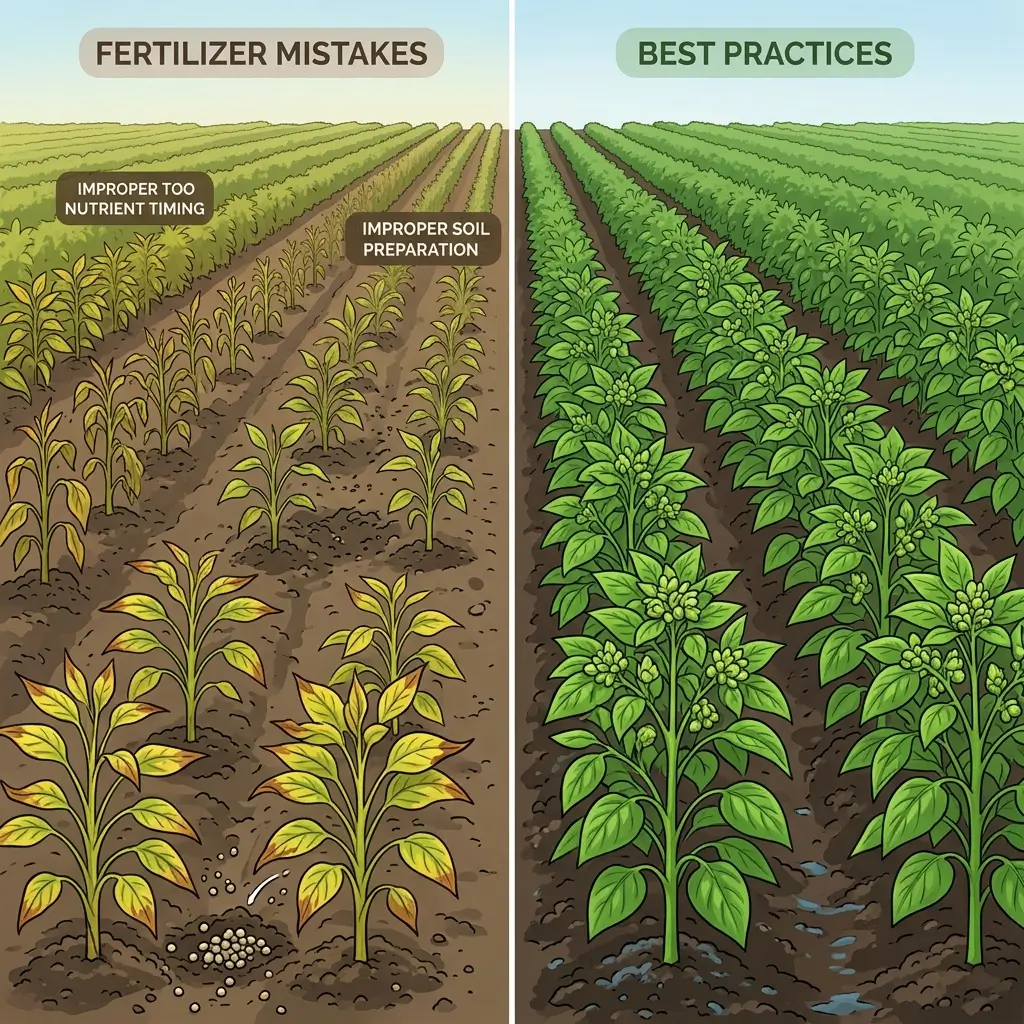
Many farmers make serious errors by operating under the assumption that “more fertilizer = more yield,” leading to over-application of fertilizers. Excessive fertilizer use causes plants to receive more nutrients than needed, bringing several problems. First, it causes what is called “luxury nutrition” in plants, leading to excessive vegetative growth, but reduced quality and taste in fruits. At the same time, over-fertilization makes plants more susceptible to diseases and pests, necessitating increased use of agricultural chemicals.
From an environmental perspective, excess nutrients accumulated in soil seep into groundwater with rainfall, contaminating water resources. Nitrate pollution in particular is a significant problem threatening drinking water quality. Excess nitrates accumulated in agricultural areas can be detected in groundwater years later.
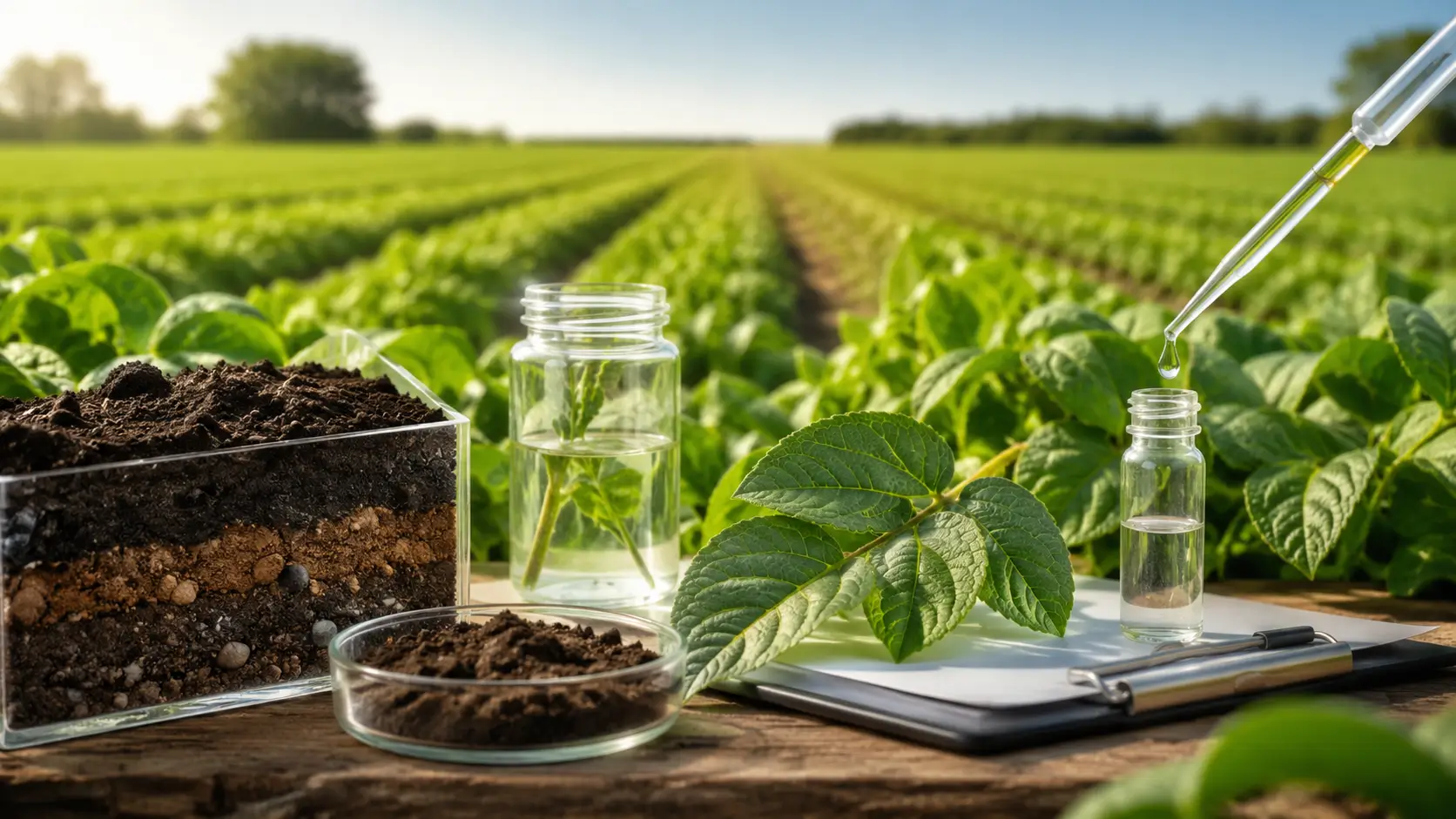
Solution: Soil analysis and plant tissue analysis must be conducted. Following these analyses, the actual nutrient needs of plants should be determined, and only the required amount of fertilizer should be applied. Controlled and balanced fertilizer use optimizes both yield and quality. Additionally, slow-release and organic fertilizers offer a safer option by reducing the risk of over-application.
Mistake 2: Insufficient Nutrition and Misdiagnosis
Some farmers immediately resort to iron or zinc fertilizers when they see yellowing leaves, rolling, or similar symptoms. However, these symptoms can result from different nutrient deficiencies. For example, leaf yellowing can result from nitrogen deficiency, potassium deficiency, or even magnesium deficiency. Incorrect diagnosis followed by wrong fertilizer application not only fails to solve the problem but also creates unwanted accumulation in the soil.
Another common mistake is attempting to address micronutrient deficiencies (iron, zinc, copper, boron, manganese, etc.) with soil fertilizers. If soil pH is high (alkaline soils), these micronutrients, though present in the soil, become unavailable to plants. In these cases, foliar applications are much more effective.
Solution: It is important not to confuse disease symptoms with nutrient deficiencies. When symptoms appear, plant tissue analysis should be performed first to identify missing elements. If soil pH is high, foliar fertilizer applications should be preferred for micronutrient supplementation. Additionally, soil pH-lowering applications (increasing organic matter, using acidic fertilizers) should be performed.
Mistake 3: Incorrect Application Timing
Fertilizer, no matter how high quality, is ineffective if applied at the wrong time. Because most farmers are unaware of the periods when plants need nutrients most, they apply fertilizer at times when the risk of leaf toxicity or disease is high. For example, applying foliar fertilizer during intense sunlight can cause leaf burn damage. Similarly, applying excessive nitrogen fertilizer close to flowering period causes yield loss.
Although it varies by region and crop type, generally, plants require the most nutrients during stem elongation and fruit development stages. Fertilizer applications during these periods yield the most effective results.
Solution: A fertilizer application schedule should be prepared according to the crop variety, sowing time, and climate characteristics of the region. Foliar fertilizers should be applied in early morning hours or evening (2-3 hours before sunset). Mineral fertilizers should coincide with the period of maximum plant growth. Checking rainfall forecasts, at least 4-6 hours after foliar applications should not receive rain.
Mistake 4: Fertilizer Application Without Soil Preparation
Fertilizer applications on eroded, high-pH, saline, or organic matter-deficient soils yield very limited results. If soil structure is poor, some of the applied fertilizers cannot be absorbed by plants, and the remainder either accumulates or is transported in the soil.
The effectiveness of mineral fertilizers is quite low in soils poor in organic matter. Because when beneficial microorganisms in soil decrease, plants have difficulty absorbing nutrients. Additionally, in high-pH soils, elements such as phosphorus, potassium, zinc, and iron become bound in soil and become unavailable to plants.
Solution: Before fertilizer application, soil analysis should be conducted to determine soil characteristics (pH, organic matter, salt, texture, etc.). If soil pH is high, lime-reducing applications should be performed. If organic matter is insufficient, compost or other organic materials should be incorporated into the soil. Fertilizers applied after these preparations yield much more effective results.
Mistake 5: Unconscious Mixing of Fertilizer Types
Some farmers unknowingly mix different fertilizer types together to increase chances of success. However, some fertilizer combinations, as a result of chemical reactions, reduce fertilizer effectiveness and may even cause plant poisoning. For example, if lime (Ca) and phosphorus fertilizers are applied simultaneously, calcium phosphate forms, making phosphorus unavailable to plants. Similarly, mixing some pesticides with fertilizers can reduce the effectiveness of both the fertilizer and the pesticide.
Solution: Fertilizer combinations should be made according to agronomist recommendations. The list of fertilizers to be applied between plants should comply with the guide provided by the product manufacturer. In case of doubt, applying fertilizer alone is safer.
Conclusion: Conscious Fertilizer Use is the Key to Success
Correcting fertilizer application errors is critical for minimizing yield loss in agriculture, protecting the environment, and reducing production costs. Soil analysis, plant tissue analysis, correct application timing, appropriate fertilizer selection, and controlled use are the foundations of successful farming. Each farmer should learn the characteristics of their own agricultural land and develop an appropriate fertilizer strategy accordingly.