Ammonium or Nitrate? The Effect of Nitrogen Form on Root-Zone pH
Nitrogen is one of the essential nutrients with the greatest impact on plant growth and crop yield. However, successful nitrogen management is not determined only by how much nitrogen is applied. The chemical form in which nitrogen is supplied is equally important.
Plants mainly absorb mineral nitrogen as ammonium (NH₄⁺) and nitrate (NO₃⁻). Because these forms are absorbed through different physiological mechanisms, they can influence the pH of the rhizosphere—the narrow area of soil surrounding the roots—in opposite directions.
1. Why Do Ammonium and Nitrate Affect Rhizosphere pH Differently?
Ammonium is positively charged. When plants absorb NH₄⁺, roots generally release hydrogen ions to maintain electrical balance.
This tends to lower the pH around the root surface.
Nitrate, in contrast, carries a negative charge. When nitrate uptake dominates, the physiological processes associated with ion balance generally cause rhizosphere pH to increase.
These changes may strongly influence the availability of phosphorus, iron, zinc, manganese, calcium and magnesium.
2. Benefits and Risks of Ammonium Nutrition
In calcareous or alkaline soils, controlled ammonium nutrition may create localized acidification around the roots.
This can help improve the availability of phosphorus and several micronutrients that become poorly available at high soil pH.
However, excessive ammonium is not beneficial.
Prolonged exposure to high NH₄⁺ concentrations may disturb ion balance and plant metabolism, restrict root development and eventually result in ammonium toxicity in sensitive crops.
Ammonium can also influence the uptake of potassium, calcium and magnesium because all of these nutrients are positively charged ions.
For this reason, nitrogen management should always be considered as part of the complete nutrient program.
3. Advantages and Limitations of Nitrate Nutrition
Nitrate is a major nitrogen source for many agricultural crops.
It can be efficiently absorbed by roots and supports rapid plant development under suitable conditions.
However, nitrate-dominated nutrition can raise rhizosphere pH.
In alkaline and calcareous soils, this may reduce the availability of iron, manganese, zinc and phosphorus.
A plant can therefore show deficiency symptoms even when laboratory soil analysis indicates that sufficient quantities of the nutrient are present.
Nitrate is also highly mobile in many soils.
Heavy rainfall or excessive irrigation can transport nitrate below the active root zone, decreasing fertilizer efficiency and increasing environmental losses.
4. Matching Nitrogen Form to Soil pH
In high-pH and calcareous soils, a controlled ammonium fraction can be useful because localized acidification may improve nutrient availability.
In acidic soils, excessive ammonium should be avoided because further acidification may create nutrient imbalances.
Nitrogen form should therefore be selected according to the starting pH of the soil rather than using the same fertilizer strategy in every field.
5. Irrigation Water and Organic Matter Matter Too
Soil pH is not the only variable controlling the root environment.
Irrigation water with high bicarbonate concentrations can continuously increase root-zone alkalinity, especially in fertigated systems.
For this reason, professional fertilizer programs should consider soil, water and plant analyses together.
Organic matter also increases the buffering capacity of soil.
Compost, crop residues, green manures and biologically active soils help moderate rapid chemical changes and create a more stable environment for nutrient uptake.
6. Ammonium or Nitrate?
There is no single answer that applies to every crop and soil.
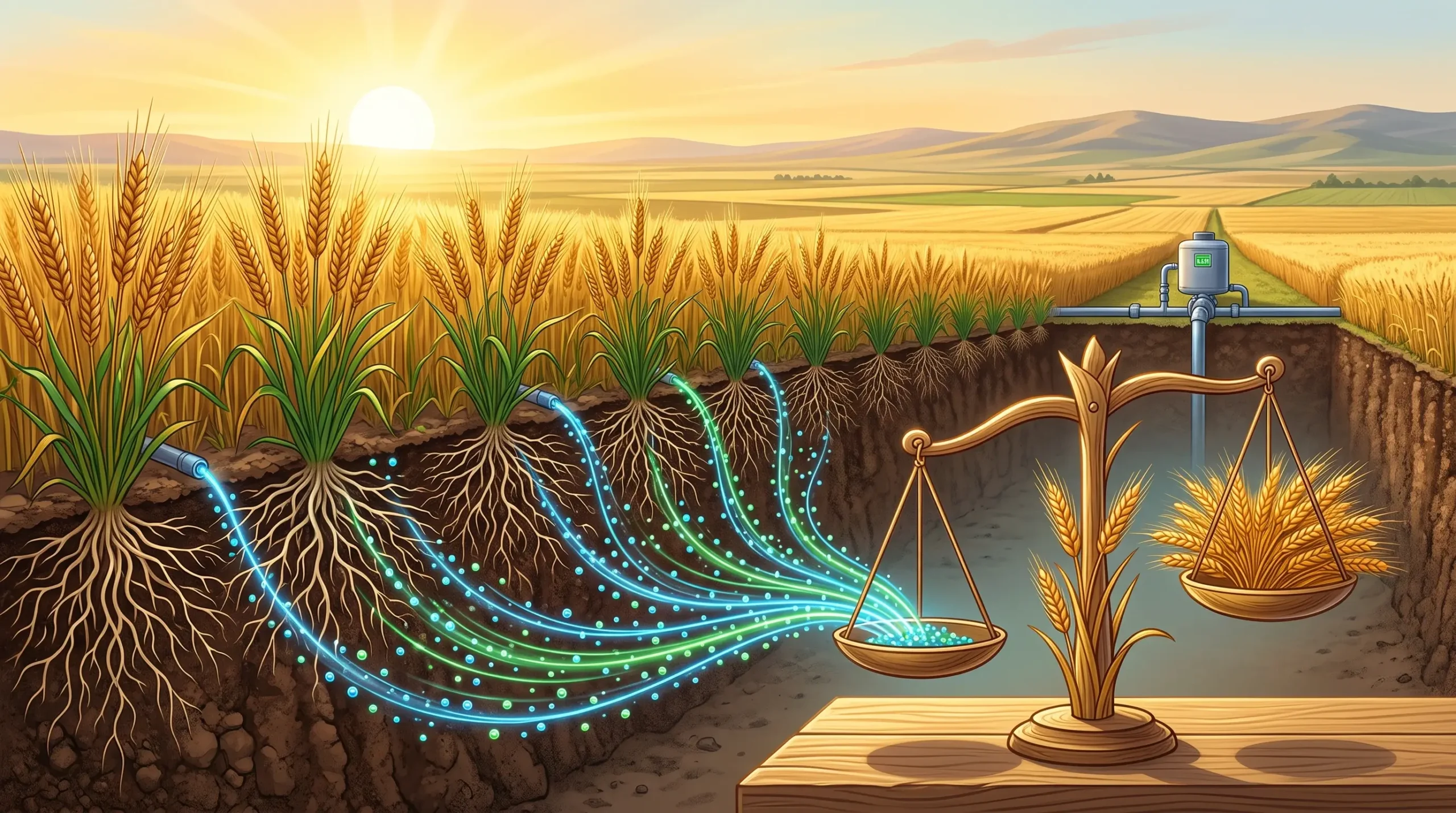
In most production systems, the best strategy is to balance ammonium and nitrate according to soil, crop and irrigation conditions.
The decision should consider soil pH, carbonate levels, organic matter, irrigation-water alkalinity, crop species, plant development stage, root aeration and the balance of other nutrients.
Conclusion
Modern nitrogen management should not focus only on the number of kilograms of nitrogen applied.
The important question is:
What does that nitrogen do inside the root zone?
Ammonium generally tends to acidify the rhizosphere, while nitrate tends to increase its pH.
Whether these effects are beneficial or harmful depends entirely on the soil and production system.
Sustainable agriculture therefore aims to provide the right nitrogen form, at the right time and in the right balance, while protecting long-term soil health.