YOU ADDED MORE FERTILIZER, YIELD DROPPED. THIS MECHANISM MUST BE WELL UNDERSTOOD
One of the most common paradoxes in agriculture is when producers apply more fertilizer to their soil or plant but fail to see the expected yield and quality. Many farmers hold the misconception that increasing the amount of fertilizer will inevitably boost output. However, soil and plant nutrition processes are extremely delicate from a biological and chemical perspective. When excessive fertilizer is used, not only is the desired benefit missed, but it is often inevitable to encounter stress in plants, degradation of soil structure, and severe yield losses. For this reason, it is crucial to understand the dynamics of fertilization correctly and to avoid application errors in the field.
Basic Principles of Fertilization and Misconceptions Fertilization is far more complex than simply supplying nutrients to the plant. Factors such as the soil’s existing nutrient status, organic matter content, pH level, and salinity directly affect the availability of nutrient rates. The biggest mistake producers frequently make is to increase the amount of fertilizer without conducting soil and leaf analyses, often due to the widespread misconception that “more is better.” Yet every plant has specific nutritional needs, and applications above these needs can block nutrient uptake and even lead to toxicity.
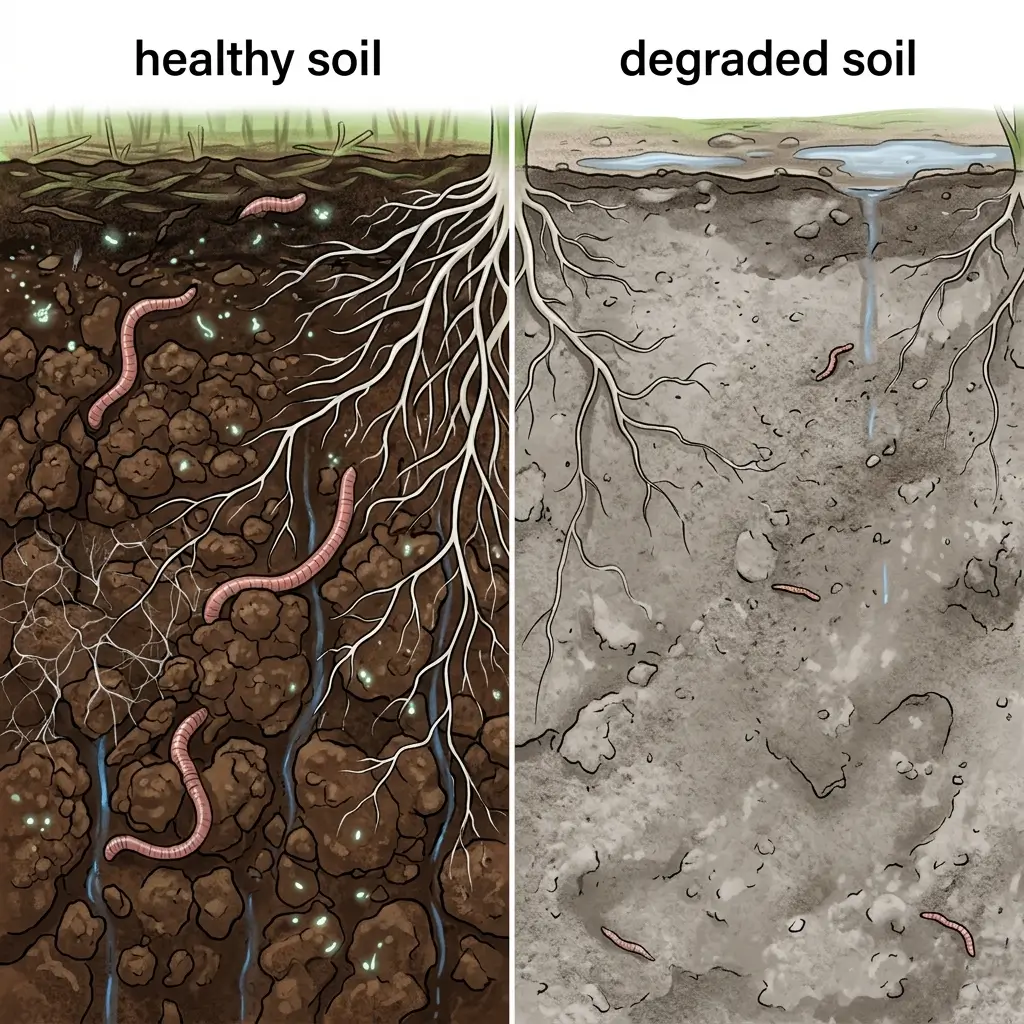
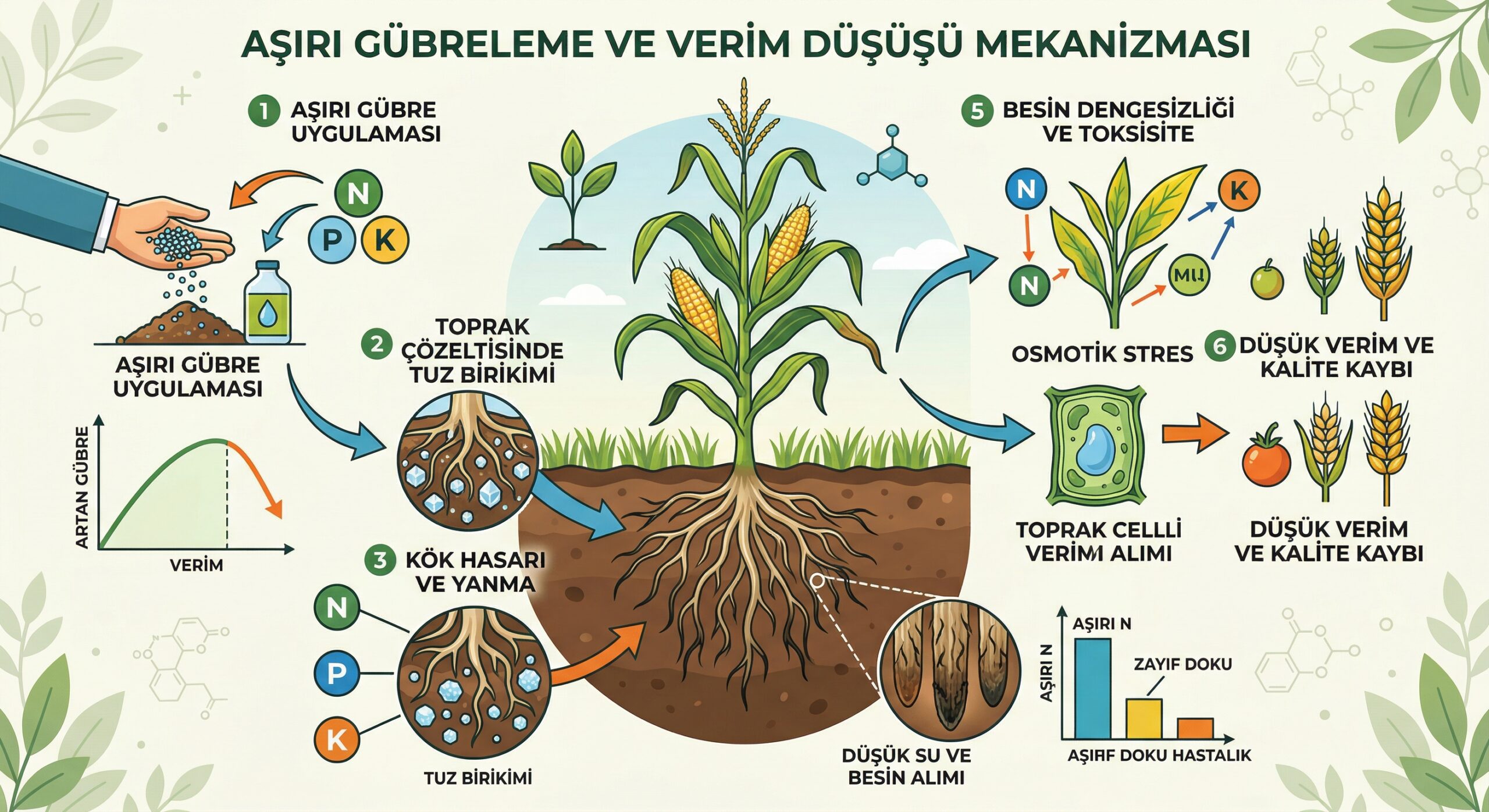
Effects of Over-fertilization on Plants and Soil In the balance of plant nutrition, fertilizer applications above a certain quantity lead to “nutrient antagonism” in plants, particularly among macronutrients like nitrogen, potassium, and phosphorus. This condition occurs when an excessive amount of one element blocks the uptake of others. For example, applying excessive nitrogen can make potassium and magnesium uptake difficult, causing plant stress. Likewise, excessive phosphorus can cause a zinc deficiency in the plant. As a result of these imbalances, the plant experiences slowed development, reduced flowering, as well as a decrease in product quality and quantity. Over-fertilizing soil causes increased soil salinity and degradation of soil structure. Salinity blocks water uptake by roots and weakens the root system. In the long run, this condition leads to the soil becoming infertile and risks agricultural sustainability. The failure to conduct soil analyses regularly results in an inability to understand problems such as micronutrient deficiency or excess, leading to incorrect interventions.
Necessary Steps for Correct Fertilization To achieve yield increase and minimize plant stress, the first step is regular and accurate soil analysis. As a result of the analysis, which elements are deficient and which are in excess in the soil are clearly identified. Leaf analyses, on the other hand, are critical in diagnosing the nutritional status directly reflected in the plant. Based on the analysis results, only the deficient nutrients should be applied at the appropriate time and dosage. The timing of fertilizer application is at least as important as its quantity. It should be known which nutrient the plant needs most at which growth stage, and fertilization should be planned according to this schedule. A common mistake is providing high dosages of fertilizer, especially outside the active growth period. This approach both causes nutrient salts to accumulate around the root system and weakens the plant’s defense mechanisms.
Importance of Micronutrients and Stress In the plant nutrition process, the importance of micronutrients should be understood as much as macronutrients. Micronutrients like zinc, iron, and manganese are indispensable for the plant’s enzymatic activities and metabolic processes. Applying excessive macronutrients makes the uptake of these micronutrients even more difficult, giving rise to stress conditions often referred to as “hidden hunger,” which can be difficult to diagnose. A significant portion of agricultural yield losses stems from these types of micronutrient deficiencies.
Application Errors and Solution Ways Incorrect advice taken from individuals who are not experts in the field or unverified application habits from the field can lead to serious errors in fertilization. The use of popular products, in particular, at high dosages without analysis and without need, causes both economic loss and reduced product quality. To overcome this situation, planned and controlled fertilization should be conducted with the guidance of agricultural advisors, and the process should be monitored with leaf and soil analyses.
Yield Increase with Controlled and Informed Fertilization Acting with awareness in fertilization is not only necessary for higher yield but also for long-term soil health and agricultural sustainability. The main reasons for yield drops due to excessive fertilizer are the disruption of nutrient balance, increased soil salinity, micronutrient deficiencies, and exposing the plant to unnecessary stress. Accuracy, moderation, and application based on analyses should be the fundamental criteria in plant nutrition. In this way, both economic gain and quality, high-yielding product cultivation can be ensured.