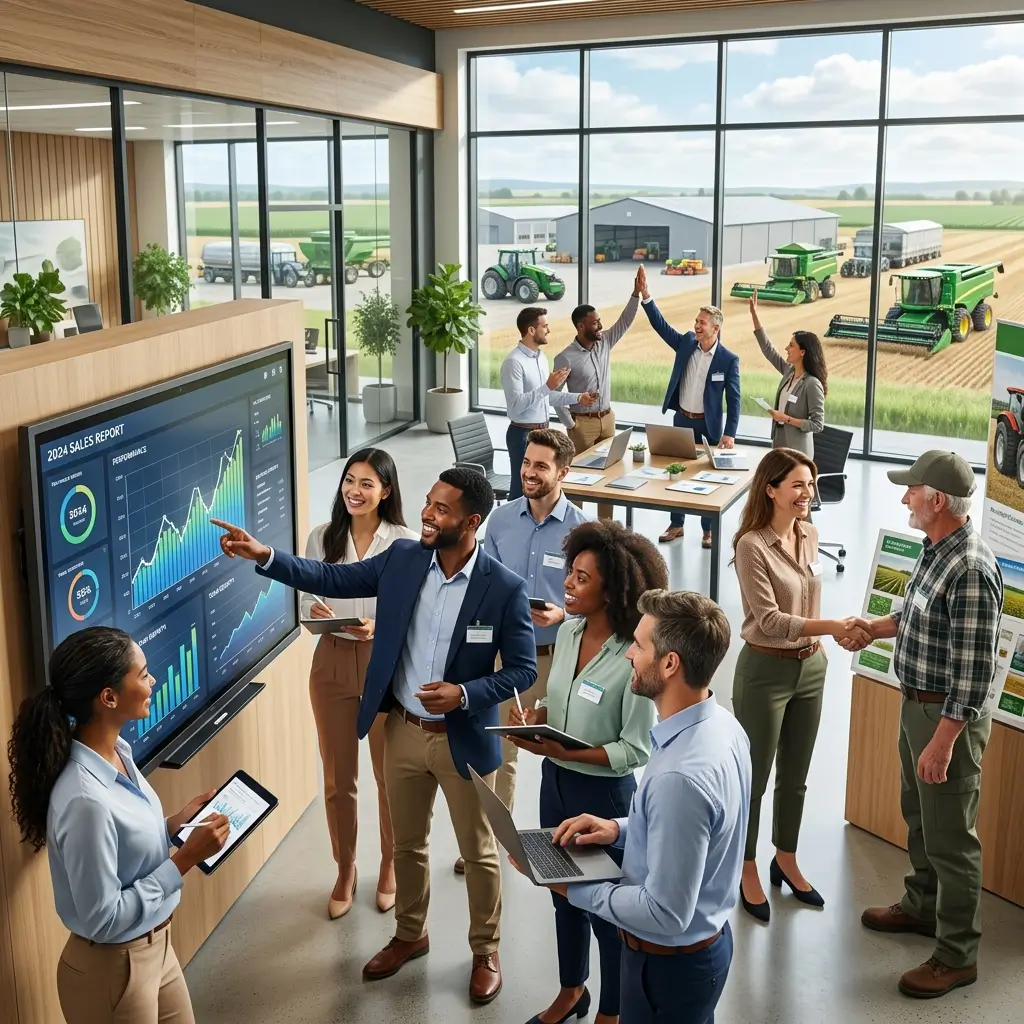
Dealer Motivation Strategies: The Cornerstone of Sales Success in Ecological Agriculture Products
Marketing and distributing ecological agriculture products does not end with developing a good product. It is essential to have a strong dealer network to reach farmers with these products, solve their problems, and meet their needs. Dealers serve as a critical bridge between manufacturers and farmers. Low dealer motivation leads to unmet sales targets, damaged product image, and loss of market share. In this article, we will examine in detail the strategies that increase dealer motivation in the ecological agriculture products sector.
The Importance of Dealer Motivation
A dealer is an important actor who communicates directly with the farmer, promotes the product, provides technical knowledge, and subsequently provides customer service. A dealer with low motivation:
- Promotes the product weakly
- May provide incorrect information to farmers
- Leaves after-sales support incomplete
- May redirect customers to competitor products
- Makes sales only within limited capacity and fails to meet targets
Conversely, a well-motivated dealer:
- Effectively markets the product
- Gains farmers’ trust
- Provides good technical support
- Increases customer satisfaction
- Exceeds sales targets
- Creates loyalty toward the product
Strategy 1: Education and Empowerment
The most important foundation of dealer motivation is ensuring dealers have complete and in-depth knowledge about the product. A dealer who is not informed about product features, usage methods, benefits, correct application techniques, common problems, and solutions cannot inspire confidence in customers.
Effective training programs:
- Product introduction training: Product chemical composition, agricultural benefits, economic gains for farmers
- Technical training: Correct application method, dosage, timing, counters and equipment
- Farmer consultation training: How dealers should provide advice to farmers and answer their questions
- Field observations: Practical training in agricultural fields where the product is used
- Certification programs: Giving certificates to dealers who complete training and increasing their status
Training should not only occur at product launch but be repeated regularly. New products, new technologies, and changing market conditions require continuous updates.
Strategy 2: Financial Incentives and Rewards
The second important dimension of dealer motivation is financial gain. Dealers are people who earn as they sell. However, limiting motivation to margin alone does not provide long-term motivation.
Effective financial incentives:
- Variable margins by product categories: Higher margins on high-yield products
- Sales target bonus system: Additional bonus payments to dealers reaching monthly or seasonal sales targets
- Turnover-based discounts: Extra discounts for dealers reaching certain turnover amounts
- Early payment discounts: Additional discount for quick payments
- Annual performance awards: Travel, gifts, or cash payments to dealers showing best performance at year-end
- Referral systems: Bonuses for bringing new dealers
- Customer loyalty programs: Offering additional benefits to dealer’s customers, thus increasing dealer’s customer retention power
Financial incentives should be presented clearly and understandably, with achievable targets.
Strategy 3: Technical and Marketing Support
A dealer may be overloaded to handle marketing and sales alone. The manufacturing company should provide strong marketing and technical support to its dealers.
Support applications:
- Marketing materials: Brochures, posters, social media content, video tutorials
- Joint marketing campaigns: Agriculture days and farmer education seminars organized together by company and dealer
- Digital marketing support: Website, social media management, online advertising
- Customer service center: Central helpline to answer farmers’ questions
- Technical knowledge consultants: Regional managers or technical experts providing dealer support
- Supply assurance: Guarantee of never experiencing product shortage
These supports strengthen dealer customer relationships, thereby increasing sales success.
Strategy 4: Performance Monitoring and Feedback
Dealer performance should be monitored regularly and feedback should be provided. Feedback should not only be negative criticism but also appreciation of successes.
Performance management:
- Monthly sales reports: Company monitoring dealer sales figures
- Customer satisfaction surveys: Gathering farmers’ opinions about dealer services
- Regular meetings: Dealer meetings held monthly or semi-annually
- Success appreciation: Recognizing dealers showing good performance within and outside the company
- Improvement plans: Developing improvement plans together with underperforming dealers
Feedback should be personal and constructive, given with an effort to find a joint solution with the dealer.
Strategy 5: Building Dealer Community
Dealers not feeling alone, connecting with other dealers, and sharing experiences are important parts of motivation.
Community building:
- Creating dealer networks: Dealers in similar geography or similar size forming a group
- Dealer meetings: Events where all dealers come together once or twice a year
- Dealer forums: Dealers learning from each other in online or offline environments
- Dealer mentoring: Successful dealers guiding new or underperforming dealers
- Dealer certificates and titles: Dealer classification (Platinum, Gold, Silver) and providing privileges accordingly
This approach strengthens company loyalty by creating a sense of family among dealers.
Strategy 6: Product Quality and Innovation
For long-term dealer motivation, product quality and innovations made by the company are very important. A good product provides dealers with sales advantage, customer satisfaction is high, dealer strength increases.
In quality and innovation:
- Product research: Developing new products according to farmers’ needs
- Quality control: Strict quality controls during production
- Dealer feedback: Company listening to problems that dealers learn from customers
- R&D investments: Research and development contributing to sector development
- Product eco-friendliness: Developing environmentally friendly and sustainable products
Good products will bring success to dealers, so dealer motivation will automatically increase.
Strategy 7: Social Responsibility and Value Sharing
Modern farmers and dealers want to work with companies that are not only profit-oriented but also carry social and environmental responsibility. Social responsibility awareness shown by the company will also motivate dealers.
Examples of social responsibility:
- Environmental protection work: Company work on soil, water, and environment protection
- Farmer education programs: Free education or consultation services
- Dealer social support: Support programs for dealer’s family and social security
- Local development: Contributing to economic and social development of the area where dealer operates
- Ethical trading: Honest and transparent business practices protecting customer rights
Such work deepens dealer’s relationship with the company at emotional and value levels.
Conclusion: Dealer Motivation is the Key to Long-Term Success
Success in the ecological agriculture products market is not only about having a good product but also about having a strong and highly motivated dealer network. Education, financial incentives, technical support, performance management, community building, product quality, and social responsibility are the cornerstones of dealer motivation. Companies that do not implement these strategies holistically fail to succeed in the market and lose competitive power. Each company should understand the characteristics, needs, and dynamics of its own dealer network and develop a motivation strategy suited to itself.