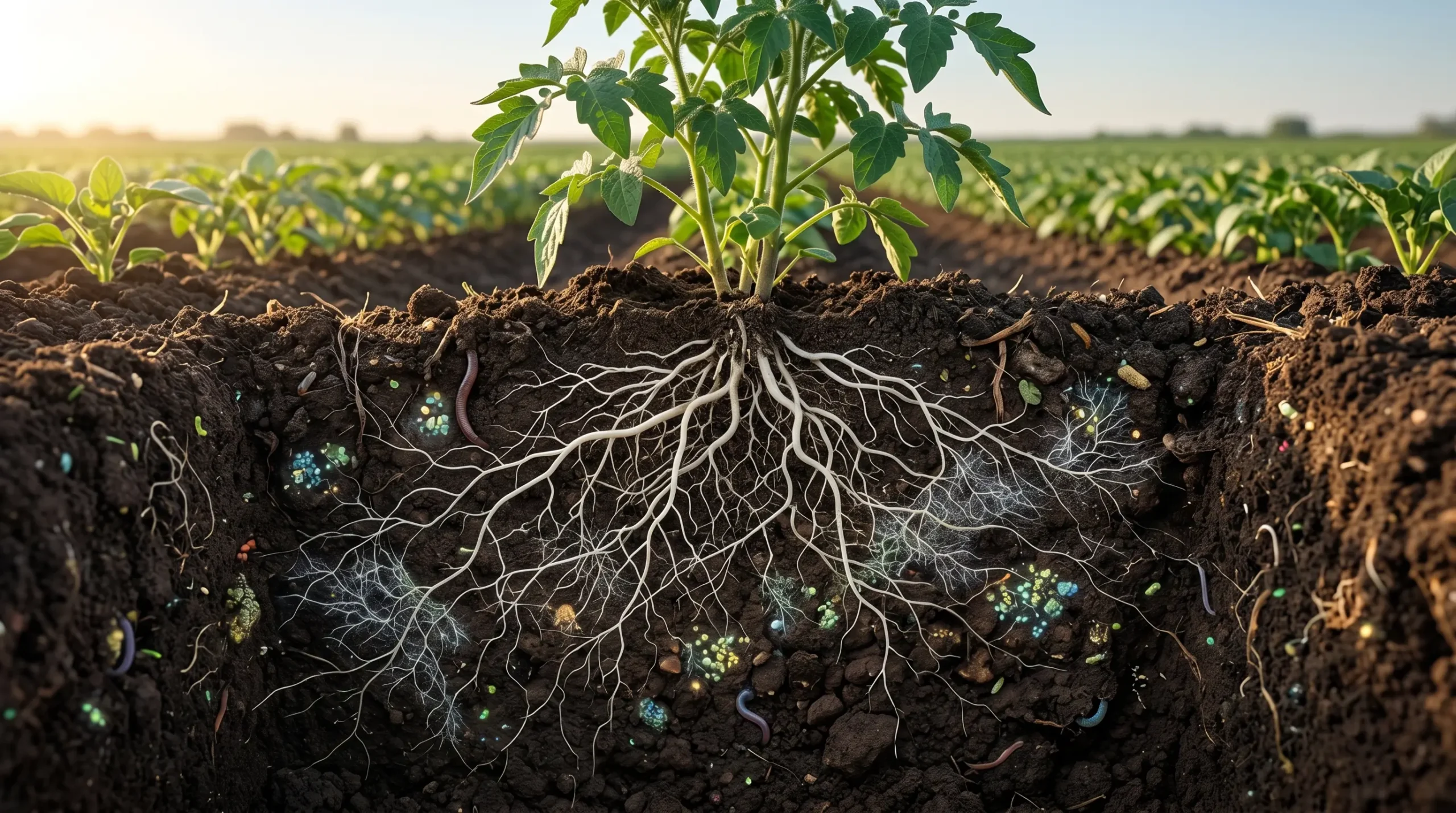
Soil Vitality and Microorganisms: The Foundation of Strong Roots
“Soil Vitality and Microorganisms: The Foundation of Strong Roots” is the most vital biological system that increases your plants’ natural resistance against environmental factors and ensures optimum yield in ecological farming. We often tend to think of soil merely as an inanimate material and a water reservoir. However, healthy soil is the world’s most densely populated and dynamic factory, where billions of living organisms work continuously. The heart of ecological farming beats exactly in this factory, that is, in the biological vitality of the soil. These microscopic workers are the true architects of sustainable agricultural production, strong root systems, and high-quality harvests.
Invisible Workers: The Soil Food Web and Nutrient Cycle Just a teaspoon of healthy ecological farming soil contains more microorganisms than the human population on earth. This massive army, consisting of bacteria, fungi, actinomycetes, algae, and protozoa, starts working by breaking down any organic material that falls into the soil. As microorganisms decompose these organic substances, they convert elements trapped within them, such as carbon, nitrogen, phosphorus, and sulfur, into inorganic forms that the plant can absorb through its roots. This tremendous process is called “mineralization.” The higher the biological vitality in the soil, the faster and more efficiently the mineralization process works.
Mycorrhizal Fungi: Invisible Extensions of Roots and Water Management One of the most fascinating actors of soil vitality in ecological farming is undoubtedly mycorrhizal fungi. Mycorrhizae are beneficial fungal species that establish a symbiotic relationship with plant roots. Their filamentous structures (hyphae) spread to depths and fine capillary spaces that plant roots cannot reach, increasing the root surface area hundreds of times. This network absorbs water and elements like phosphorus, zinc, and copper almost like a sponge.
Nitrogen-Fixing Bacteria: The Natural Fertilizer Factory in the Air Another miracle of soil vitality is the bacteria that convert free nitrogen in the air into a form plants can use. Beneficial soil bacteria like Rhizobium and Azotobacter capture this free nitrogen and convert it into ammonium and nitrate forms in the plant roots.
Natural Shield and Competitiveness Against Harsh Conditions The dense and healthy microorganism population in the soil completely colonizes the root zone. This beneficial colonization creates a physical and biological shield around the root. The greater the number and diversity of beneficial microorganisms, the lower the chance of survival for malicious factors that can stress the plant.
Physical Effects on Soil Structure and Aeration The benefits of microorganisms are not limited to chemical and biological processes; they also directly improve the physical structure of the soil. They secrete substances called “glomalin,” which act almost like a biological glue, binding fine soil particles together to create a granular and spongy soil structure.
Ways to Increase Soil Vitality in Ecological Farming The first rule of preserving soil vitality is to provide it with a carbon source. Quality compost applications, green manuring, and the use of leonardite-sourced humic and fulvic acids mean setting a rich table for soil microorganisms.
In Conclusion Soil vitality is not just a component of ecological farming, it is its very essence. Strengthening the biological structure of the soil is the most profitable investment that guarantees the fertility of your field.